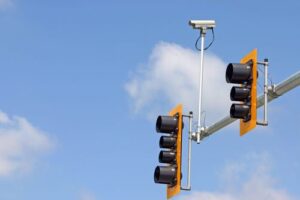
Suffolk County’s Red Light program, a safety agenda focused on changing driver behavior at red light intersections using automated enforcement, recently released its annual report that has resulted in more questions than answers.
The 2015 Red Light Safety Program Annual Report, the most recent report to date, shows that a total of $31 million in gross revenue was collected from citations issued from the start of the program in 2010 but paid in 2015, a drop of some $1.9 million from the previous year. However, an entire section containing accident data is missing in this report that was released in April. In the past, this section has included how many accidents happened and what the circumstances were how many involved injuries, what intersections they occurred at, and more.
“It’s a disgrace,” said Suffolk County Legislator Rob Trotta. “They say it’s coming — but they won’t even tell us who prepares the report.”
Suffolk County claims its red-light program is safety-focused with the intention being to change driver behavior at red light intersections. There are some who disagree.
Take Stephen Ruth, frequently referred to as the “Red Light Robin Hood,” who has made it his mission to eliminate Suffolk County’s red-light camera program. According to Ruth, Suffolk County’s red-light camera program has led to several fatal accidents after the length of yellow lights were shortened in order to get more citations.
Ruth has posted videos on his Facebook page that show yellow lights that are shorter at intersections where red light cameras are installed. One of Ruth’s videos taken at an intersection without a camera shows a yellow light that is five seconds. At an intersection with a red light camera, it is three seconds.
Through its contract with Suffolk County, Xerox provides, installs and maintains the cameras at no charge. The company makes money on the program by collecting $13 for each ticket, an amount that jumps to $33 when a camera generates more than 90 tickets in a month.
The Suffolk County Traffic and Parking Violation Agency is quick to point out that red-light running is a major cause of crashes, deaths, and injuries at signalized intersections. The goal of photo enforcement is to deter violators, not catch them, it says. Signs and public information campaigns warn drivers that photo enforcement is in use. Revenue is generated from fines paid by drivers who continue to run red lights, adds Suffolk County Traffic and Parking Violations Agency.
For a free legal consultation, call 516-451-7900
The County’s Case for Red Light Cameras
In 2019, Suffolk County decided to extend the Red Light Camera Program for another five years. Given that Stephen Ruth started a movement to overturn the program, the county’s decision comes as a bit of a shock. Though citizens and legislators like Rob Trotta have gone on the record with their opposition to the Red Light Safety Program, the government is not without data-driven reasons to continue the initiative.
It is undeniable that the program is a form of revenue for the county, but running red lights is clearly an issue that affects the safety of all drivers. Data from the Suffolk County Traffic and Parking Violations Agency shows that accidents involving a red light runner often result in serious injuries or fatalities, with individuals who did not run the light accounting for two-thirds of those deaths. Something clearly must be done to help prevent these tragedies.
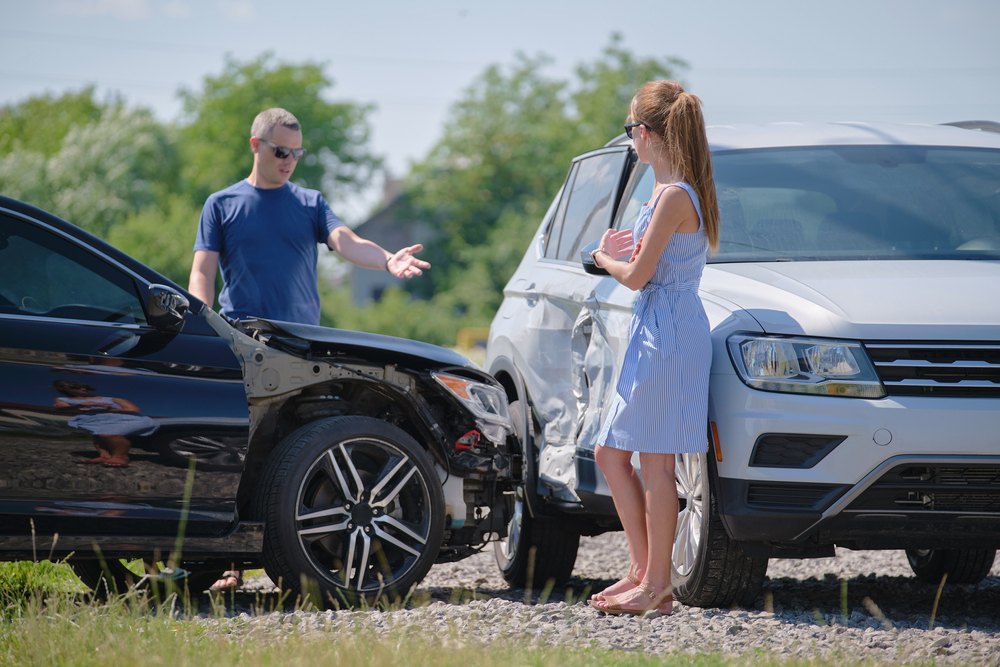
However, when reporting on the 2019 renewal of the Red Light Safety Program, CBS New York noted that the county has raked in an annual average of $30 million from the initiative while car wrecks at sites with traffic cameras have increased 60%. Apparently, the program has not resulted in the reduction of accidents but has actually led to even more crashes.
What I Can Do if I Have Been Injured in a Car Accident
You may have been affected by this increase in car wrecks at intersections with red-light safety program cameras installed. Injuries in motor vehicle accidents can have serious and life-altering effects, but there is a way to achieve justice after your crash. The best way to ensure that your claim for compensation is handled effectively and successfully is to seek help from experienced car accident attorneys like those at Rosenberg & Glick.
New York law dictates a three-year statute of limitations on all personal injury claims, including car crash cases. In other words, you have three years from the date of your injury to pursue compensation in court. After that three-year mark, you lose the ability to bring a lawsuit against the at-fault driver, so it is crucial to file your claim as early as possible.
You will need to provide evidence of the opposing driver’s fault, but that is where the Red Light Safety Program can have a positive effect. If your attorney is able to recover the footage from the red light at the intersection in which you were injured, it may clearly show that the opposing driver ran the light and carries most or all of the fault for your accident. New York is a pure contributory negligence state, which means that you can still recover compensation for the harm you suffer in a car crash even if you share some of the blame for the wreck. The only catch is that your compensation will be reduced by the same percentage as your percentage of fault.
The takeaway from this is that, given that Suffolk County has continued to use red-light traffic cameras, the footage from these cameras may absolve you of any responsibility for the accident, maximizing the amount you can recover for your injuries.
If you or a loved one has been injured or killed in an automobile accident, contact Rosenberg & Gluck, personal injury attorneys. We will provide you with a FREE, confidential legal consultation to learn more about your options.