For a free legal consultation, call 516-451-7900
Dangers of Underride Accidents
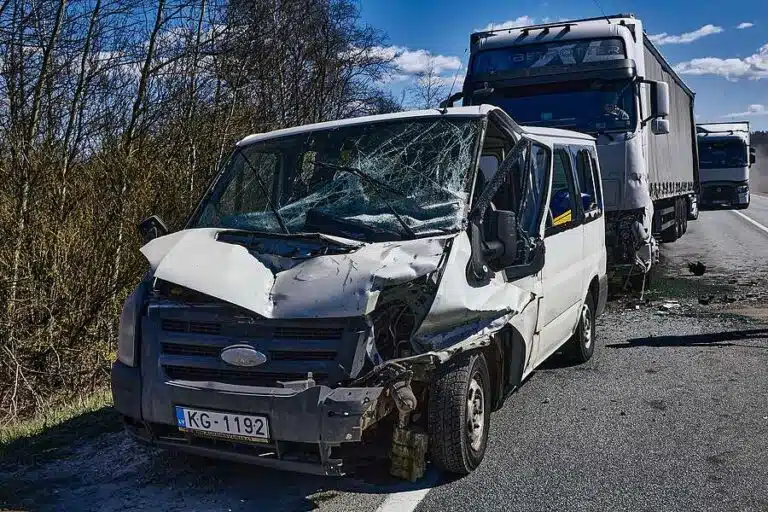
Truck underride accidents can be deadly to the passengers in the vehicle striking the truck, even at low speeds. The accident occurs when the car collides with the truck or the trailer and slides under the truck, often ripping the roof off the smaller vehicle and killing or severely injuring its occupants. If the collision happens near the axles of the truck or trailer, the car may go only partially under the vehicle, creating significantly fewer catastrophic accidents. The primary danger of underride accidents is that because the front end of the vehicle is under the truck, the frontal safety provisions of the smaller vehicle do not activate. Instead, the rear of the tractor-trailer intrudes into the passenger compartment of the smaller vehicle, causing severe injuries or fatalities to the car’s occupants.Side Underride Accidents
Side underride collisions are usually happy at night or in low sun angle conditions. The collision usually occurs when the truck driver is:- Attempting to cross or turn onto a street
- Attempting a U-turn
- Trying to back across traffic
Rear Underride Accidents
These accidents often occur when a poorly marked truck is:- Parked on the side of the road
- Moving slowly to enter the road
- Slowing to exit the road
- Slowing for a railroad crossing.
- Dirty or non-functioning taillights
- Failure to use reflective triangles when stopped or broken down
- Failure to use emergency flashers when the truck driver attempts to enter or exit traffic at a slow speed
Complete a Free Case Evaluation form now
Front Underride Accidents
In a front underride, the truck essentially drives over the small vehicle, lodging it under the front of the truck. More than half of underride accidents involve a front underride. Front underrides often happen due to brake failure or distracted driving. This kind of accident is an override accident because the truck drives over the smaller vehicle.Visibility of Truck as Factor in Accident
The smaller vehicle driver frequently did not see the truck before an underride collision. Visibility depends on how conspicuous the truck is and how well it contrasts with its background. There are conspicuity requirements under federal regulations to help ensure that drivers see these large trailers. Generally, the elements that govern how visible the truck will be are:- Color – Does the truck conspicuously contrast its background? If not, do the colors blend into the surroundings making it difficult to see the truck? Dark colors and multi-colored trucks tend to blend into their environment and be challenging to see.
- Movement – An object moving slowly or standing still has little contrast with its background. Faster moving objects will be more visible.
- Brightness – A truck with a highly reflective surface will be more visible to others on the road by standing out against less reflective backgrounds.
- Shape – The shape of an object and any markings on it can make it more or less visible.
- Size – Generally, small objects are less conspicuous than larger ones.
Other Factors in Underrides
Other factors that are significant in side-impact underrides include:- Dirty or non-functioning sidelights
- Slow-moving vehicle
- Truck making left turn
- Truck back into traffic
Typical Injuries in Truck Override Accidents
According to the Insurance Institute for Highway Safety, thee are some 500 to 600 deaths per year from underride accidents. Among the more common injuries are underride accidents are:- Traumatic Brain Injury – Traumatic brain injury results from a violent blow to the head, sudden jolting movement of the head, or a piercing wound to the skull. Even seemingly mild brain trauma can result in potentially fatal complications.
- Spinal Cord Injuries – The severe impact and passenger compartment intrusion in an override accident can cause impact or cutting injuries to the spinal cord. Depending on the extent and nature of that injury, life-shattering permanent loss of motor function or sensation can occur.
- Lower Back Injuries – These injuries can impair the victim’s ability to move, either temporarily or permanently. They can cause permanent disabilities, leading to a lifetime of medical intervention and a lower quality of life.
- Whiplash – Whiplash is an injury to the soft tissue of the next caused by violent jolting, which strains the muscles and tissues of the neck. It often causes a severe injury that is not recognized until much later, allowing time for it to worsen. Eventually, whiplash can lead to chronic pain and loss of mobility.
- Amputation or Loss of Limb – The powerful impact of underride accidents can lead to the loss of limbs, either during the accident itself or due to crushing injuries to the limbs that later require amputation.
- Fatalities – According to a recent report, slightly more than 200 people die each year in underride and override accidents, representing only about one percent of traffic fatalities and 5.5 percent of all large truck crash fatalities. However, the report also indicates that, since there is no specific requirement to report these accidents separately, this number is likely an undercount. The report also noted that federal rules requiring side guards and front guards for trucks are under consideration, while rear guards are already mandatory. Data about underride fatalities are notoriously unreliable because of differing definitions of the type of accident and the lack of a requirement for the classification in more than 60 percent of the states.
Common Causes of Underride Accidents
The most typical causes of truck underride accidents are:- Trucks suddenly braking at high speeds
- A motorist’s failure to see the truck in adverse weather and visibility conditions
- Tire failure
- A truck driver’s negligence, including:
- Failure to use proper lights or meet visibility requirements
- Failure to have a functional underride guard
- Failure to maintain brakes
- Failure to maintain reflective tapes or tail lights
- Speeding
- Aggressive driving
- Distracted driving
- Fatigued driving
- Driving under the influence of drugs or alcohol
Common Causes of Override Accidents
The most common causes of override accidents include:- Trucks tailgating a car
- Truck brake failure
- Failure to yield
- Defective tires that prevent a safe stop
- Improper lane change
- Speeding
- Adverse weather and visibility conditions
- Driving under the influence of alcohol or drugs
- Fatigued driving
- Distracted driving
Preventing Underride Accidents
Federal regulations require, with some exceptions, that heavy trucks with a gross vehicle weight rating of approximately 10,000 pounds or more install rear impact guards on the trailers and semi-trailers. There have been some efforts to require side impact guards, but they are not currently required. These rear impact guards are essentially a crossbar on the back of a trailer truck to prevent underrides. Since late 2021, the condition of these bars has become part of the annual safety inspection of the truck. Today, most newly built tractor-trailers have underride control bars exceeding the federal requirements.Compensation for an Override or Underride Accident
Recovering compensation for injuries in a truck driving accident can present additional challenges due to the number of potentially liable parties involved. Those parties may include the truck driver, the trucking company, the truck manufacturer, the company responsible for maintaining the truck, and other at-fault parties. From these liable parties, you may recover three types of damages for your injuries. Damages have no caps in certain states – like New York – in truck accident cases. Special or Economic Damages– Economic damages are out-of-pocket expenses or financial losses resulting from your accident. Your lawyer can often prove these losses with documentary evidence such as paid invoices or wage and salary statements. Among the compensation included in economic damages are:- Medical expenses, including treatment, diagnosis, transportation, therapy, drugs, and hospital expenses
- Lost earnings, including loss of income and benefits from the date of the accident to the date of the settlement or trial award
- Loss of earning capacity, including the loss of your ability to earn income because of your injuries
- Property Damage to your vehicle
- Disfigurement and scarring
- Wrongful death, as a potential separate cause of action
- Pain and suffering, including the physical pain and suffering the victim endures and will endure from the date of and resulting from injuries suffered in the accident.
- Emotional anguish, including mood disorders, post-traumatic stress, emotional injuries resulting from scarring, all resulting from the accident
- Loss of enjoyment of life, resulting from the loss of the ability to perform activities that the victim once enjoyed doing
- Loss of consortium, including the loss of the ability to maintain a physical or emotional relationship with a spouse or life partner