Long Island Distracted Driving Accident Lawyer
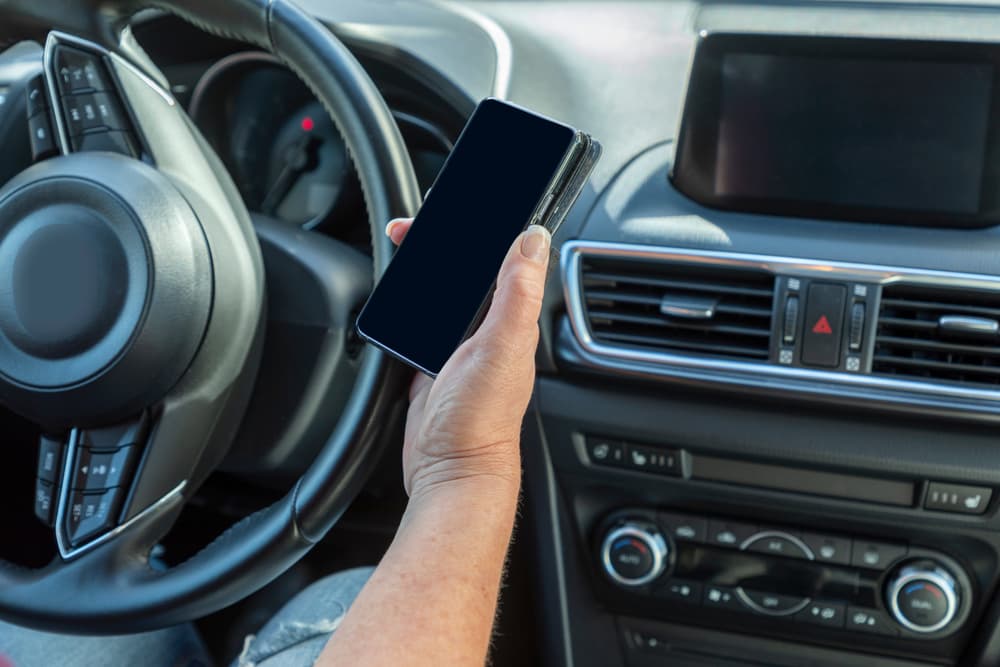
The driver who hit you made a choice. They picked up their phone, looked away from the road, and caused a collision that left you dealing with injuries, medical bills, and lost income.
Now their insurance company wants to pay you as little as possible or argue that the distraction had nothing to do with it.
The Long Island distracted driving accident lawyers at Rosenberg & Gluck LLP know all too well the devastation caused by drivers who pay more attention to their phones than to the road.
A driver who glances at a text for five seconds can travel the length of a football field without looking at the road. On crowded Long Island roads, that's more than enough time to cause a life-changing crash.
We hold negligent drivers accountable across Nassau County, Suffolk County, and every Long Island community. We handle the insurance companies and position you to make the best possible recovery.
Your consultation is free, and you pay no fees unless we win your case. Call (631) 451-7900 or contact us online.
- Michael Brandt
- Kelvin M.
- Bobby Pellegrino
- Raja
- Haze Linez
- Brooklynn Matos
- Roberta Levesque
- Geralda Family
- Richard Gorddard
- Jimmy Enright
- James Meyers
- Alyssa Macomber
- Stephanie Pinkall
- Kaitlyn Barrett
- Martin Dziki
- Hannah Michaelson
- Carlos P.
- Nazzarini64
- Karen Wigdzinski
- John Doe
- Austin Vaccaro
- Christopher Jones
- Joanne Dee
- Tika Carswell
- Victoria Manna
- Aaron Arasmo
- Renee Marie Ruquet
- Missy Rasor
- Mike Addotta
- Kevin Hembury
- Kieran Weaver
- Danielle Smith
- Lauryn Beauge
- George Osei
- Gary Kornova
- Nanette Soto
- Selin Gultekin
- L.D.
- Fredi Larios
- Josh Elkin
- Julienne Leone
- Mejora Tubilletera
- David Arroyo
- Anthony C.
- Tracey Fadem
- Deborah Linsalata
- Ligia Alvarez
- Joymarie Thomassen
- Karen Ruiz
- Anthony Darme
- Wanda Kelly
- arline Magnusson
- Mike Quilty
- Olga Velazquez
- Laura Stepper
- Walter Bynum
- Ricardo Campos
- Raquel Tejada
- Cupcakes And Conversation
- Courtney Cosentino
- Rousseau Records
- Christine Sanchez
- John Cubells
- Kim
- Sara Amazing
- Matt Futerko
- Dave Hancock
- Dawn Madigan
- Mary Ivory
- Ron Silver
- Jason Singh
- Rosanna Vasquez
- Lisa Pirozzi
- Tanya Kaiser
- Allison Wolff
- Janet Mary
- Marissa Marie
- Mahnaz Chaudhry
- Janet Matos
- Mick Staggz
- Letesha Strong
- Thomas Conway
- Edgar Morales
- Christie Ristori
- Amy Hoffman
- Fred Ruiz
- Woolymotos Motos
- Paula
- Michele Underwood
- Michelle Hannon
- Debra Flanagan
- Ozzyfied
- Theresa Stansell
- Diane Lackey
- Katelyn Burns
- Caitlyn Caputo
- Chris Dolan
- Andrea Postek
- Tara Teague
- Ronald White
- Peter Reimann
- Christine Daniels
- Angelo D.
- Amanda Bentley
- Jennie Turner
- William Mihailovich
- J. Williams
- Sam Fremont
- Steve Glauber
- Ryan Markowitz
- Frank Compitello
- Barney Giannone
- Katrina Kalb
- Alan B.
- Karen Ciecwesz
- Janet Clancy
- MariaElena Devoe
- Cheryl Bates
- Joshua Marino
- Debra Domino
- Nicholas Schwab
- goncalo coelho
- Stewart Kelly
- Lorraine Cummings
- timothy moss
- Anthony Przepiora
- Tatyana Band
- Kristoff Galloway
- April Heron
- Janet Struble
- Rajak Bejok
- Crystal Ann
- Tammy Marin
- Scott Aug
- Sabrina Studioso
- Sal L.
- Miriam Velez
- Tricia Granata
- Hammad bhatti
- Tyesha Cepeda
- Nina Kamal
- Frank
- Nicole Ashley
- Suzanne Christensen
- Michelle A.
- Jenna Lorandini
- Jose Del Rosario
- Heather Ashley
- James Rieger
- Kathryn Belmonte
- Dave Hayes
- Carlos F.
- Lisa Ash
- Nicholas Maccarrone
- Pat Telschow
- Karen Fitzgerald
- Frank Vicidomine
- Juan Gonzalez
- Billie Phillips
- Kyle D. Perry
- June Haag
- Jerry Villa
- Olivier Vidal
- Nema S.
- Michele MacDonald
- Frank
- Rich W.
- sabrina alessi
- Deborah B.
- Janet Haynes
- Chrissie Willman
- Joseph Sampson
- Steve Gould
- Knicks 2020 Go for it
- Liz Dicecco-Roots
- Michael
$25.4M
$9.5M
$2.5M
$2M+
$2.4M
$1M+
$1.5M
$1.5M
$1.4M
$1.2M
7 Figure
$1M
$1M
$1M
$900K
$900K
$850K
$750K
$750K
$740K
$650K
$575K
$500K
$500K
$370K
Multi-Million
$300K
$230K
$225K
6 Figure
$95K
Why Choose Rosenberg & Gluck LLP for Your Distracted Driving Accident Case?
Personal injury attorneys David Rosenberg and Gary Gluck founded Rosenberg & Gluck LLP with a commitment to helping injured New Yorkers stand up to insurance companies and pursue fair compensation. What began as a small personal injury practice has grown into a respected Long Island law firm serving injury victims throughout Nassau and Suffolk Counties and New York City.
Today, the firm is led by a team of experienced personal injury attorneys who continue the founders' dedication to aggressive advocacy, personalized representation, and results-driven legal service.
Our Results in Cases Where At-Fault Drivers Were Not Paying Attention
Distracted driving claims share a common thread with many of our motor vehicle cases: a driver who was not paying attention and failed to yield. Our results in those cases include:
- $25.4 million verdict: dangerous intersection collision involving municipal liability
- $2.5 million recovery: crash involving multiple liable vehicles
- $2.4 million recovery: disabling injuries from a rear-end collision
- $850,000 recovery: an 83-year-old client whose car was struck by a 17-year-old driver, resulting in leg fractures and a hip injury; the insurer offered $150,000 pre-trial, and we refused to accept it
- $230,000 recovery: a 44-year-old worker sitting in the back of a work van that was rear-ended, causing tools and unattached equipment to strike him and resulting in a rib fracture and additional injuries
Past results do not guarantee a similar outcome, but they do show our determination to fight for the full and fair compensation our clients need.
Our Attorneys Have Earned Recognition That Reflects How They Practice
Martindale-Hubbell's AV Peer Review Rating is based on confidential evaluations from other attorneys and judges who have observed our work firsthand — it reflects legal ability and ethical standards, not marketing spend. Our attorneys have been selected for Super Lawyers, a distinction limited to no more than 5% of attorneys in the state.
Membership in the Million Dollar Advocates Forum and Multi-Million Dollar Advocates Forum is restricted to attorneys who have secured verdicts or settlements exceeding one million and two million dollars, respectively. Selection to the National Trial Lawyers Top 100 recognizes trial attorneys based on their results, reputation, and courtroom record.
Our Attorneys Are Recognized by the Legal Community
The Long Island car accident lawyers at Rosenberg & Gluck LLP have earned several prestigious distinctions from the legal community that reflect our commitment to our clients and the ethical standards that guide our work, including:
- Martindale-Hubbell AV Peer Review Rated
- Super Lawyers
- Million Dollar Advocates Forum
- Multi-Million Dollar Advocates Forum
- The National Trial Lawyers Top 100
We Investigate Distracted Driving Cases Aggressively From Day One
We subpoena cell phone records, obtain traffic camera footage from Nassau and Suffolk County agencies, preserve app usage data, and work with accident reconstruction professionals when needed. Insurance companies offer better settlements when they see a firm that has already built the case for trial.
We Know the Long Island Courts Where Your Case Will Be Decided
Our attorneys try cases in Nassau County Supreme Court and Suffolk County Supreme Court. Familiarity with local judges, juries, and procedural rules gives our clients an advantage that out-of-area firms cannot provide.
We Advance All Costs and Collect No Fee Unless You Recover
Your consultation is free. We handle your case on a contingency fee basis and advance all litigation costs, so finances never stand between you and a valid claim. You pay nothing unless we win.
Holtsville · 1176 Portion Rd | Garden City · 1225 Franklin Ave #325-C | Patchogue · 57 E Main St | Riverhead · 20 W Main St Suite 302
Why Do I Need a Long Island Distracted Driving Accident Lawyer?
Proving another driver was on their phone or otherwise not paying attention to the road requires building evidence that disappears quickly and legal strategies most people have never dealt with before.
There is no Breathalyzer for distracted driving. Unlike drunk driving, where a blood alcohol test creates clear proof, a texting and driving accident claim depends on cell phone records, app usage data, traffic camera footage, and witness testimony.
An experienced attorney knows how to obtain that evidence before it is deleted or overwritten.
The financial stakes are significant. According to Martindale-Nolo research published by Forbes, injury victims who hired a lawyer received a payout 91% of the time compared to only 51% without one.
After attorney fees, represented claimants still took home roughly three times more.
On Long Island, distracted driving crashes occur frequently along high-traffic corridors such as Sunrise Highway, the Long Island Expressway, Hempstead Turnpike, and Route 110. Our distracted driving accident attorneys in Nassau and Suffolk Counties can start working immediately to protect your right to full compensation, not just the amount the insurance company thinks you need.
How Do You Prove a Driver Was Distracted During a Long Island Accident?
Proving distraction requires specific evidence tied to the driver's behavior at the moment of the crash. Our attorneys pursue every available source.
Cell Phone Records and App Data
A subpoena of the at-fault driver's cell phone records can show whether they were texting, browsing, or using social media at the time of impact. App usage logs from platforms like Instagram, Snapchat, or a GPS navigation app can pinpoint activity down to the second.
Traffic Camera Footage
Many Long Island intersections and highway segments are monitored by traffic cameras. We request footage from Nassau and Suffolk County agencies and from the New York State Department of Transportation before it is recorded over.
Witness Statements
Passengers in either vehicle, nearby pedestrians, and other drivers often witness distracted behavior, such as a driver looking down at their lap, swerving between lanes, or failing to brake. We interview witnesses while their memories are fresh.
Police Accident Reports
If the responding officer noted signs of distraction, like a phone found on the seat, the driver's own admission, or a witness statement, that report becomes a critical piece of evidence in your claim.
Accident Reconstruction
In serious or fatal distracted driving crashes, our team works with accident reconstruction professionals who analyze skid marks, impact angles, vehicle damage, and braking data to demonstrate that the driver failed to react the way an attentive motorist would have.
Building a distraction case on Long Island requires speed. Evidence degrades, footage gets erased, and phone records become harder to obtain as time passes.
What are New York's distracted driving laws?
New York bans the use of handheld electronic devices while driving. Two sections of the Vehicle and Traffic Law address this directly.
VTL Section 1225-c makes it illegal to hold a cell phone to make or receive a call while a vehicle is in motion. VTL Section 1225-d goes further and prohibits texting, emailing, browsing, and any other use of a portable electronic device while driving.
Penalties include fines up to $450, a $93 surcharge, and five points on the driver's license. For drivers under 21, a first offense results in a 120-day license suspension.
A violation of these laws is strong evidence of driver negligence in a personal injury claim. If the other driver was ticketed for using a handheld device, that citation supports your case, though it is not required to prove negligence at trial.
Hands-free devices are legal for adult drivers, but they are not risk-free. Cognitive distraction — the mental focus pulled away from driving — remains a factor even during hands-free calls.
The Centers for Disease Control and Prevention (CDC) classifies distracted driving into three categories: visual (eyes off the road), manual (hands off the wheel), and cognitive (mind off driving). Texting combines all three.
What Compensation Can I Recover After a Distracted Driving Accident on Long Island?
New York is a no-fault state for auto insurance. That doesn't mean nobody is at fault for an accident. It means that you file a claim against your own insurance first, regardless of who caused the accident.
If your injuries meet New York's serious injury threshold, you can pursue damages from the at-fault driver beyond what no-fault Personal Injury Protection (PIP) covers. PIP pays up to $50,000 for medical bills and lost wages regardless of fault, but it does not cover pain and suffering.
To file a lawsuit, your injuries must qualify as "serious" per New York Insurance Law Section 5102(d). That means bone fractures, significant disfigurement, or permanent limitation of a body organ or system.
You may also qualify if a medically determined injury prevents normal daily activities for at least 90 of the first 180 days after the crash.
| Economic Damages | Non-Economic Damages |
|---|---|
| Emergency care, surgery, and rehabilitation | Physical pain and ongoing discomfort |
| Future medical treatment and therapy | Emotional distress and anxiety |
| Lost wages during recovery | Loss of enjoyment of daily activities |
| Reduced earning capacity | Scarring or permanent disfigurement |
| Out-of-pocket costs (transport, home care) | Loss of consortium for spouses |
New York's comparative negligence rule allows you to recover damages even if you share partial fault. If a jury awards $200,000 but assigns you 15% responsibility, you still recover $170,000.
Ask Rosenberg & Gluck About Your Long Island Distracted Driving Accident Claim
Q: Can I sue a driver who was texting before a crash on Long Island?
A: Yes. If a driver was using a handheld electronic device in violation of New York law and caused your injuries, you can file a personal injury lawsuit against them.
A texting and driving accident claim requires evidence of phone use at the time of the crash, which your attorney obtains through subpoenas and records requests.
Q: How much is a distracted driving accident settlement worth on Long Island?
A: There is no fixed amount. A distracted driving accident settlement depends on injury severity, the length of recovery, lost income, future medical needs, and how clearly the distraction can be proved. Our attorneys evaluate every factor to pursue the maximum recovery available.
Q: What evidence shows a driver was distracted during my accident?
A: Cell phone records, app usage data, traffic camera footage, dashcam video, witness statements, police reports, and accident reconstruction analysis can all establish distraction. The strongest cases combine multiple evidence sources. Our team moves quickly to preserve this evidence before it disappears.
What Types of Distracted Driving Cause Crashes on Long Island?
Texting while driving is the most dangerous form of distraction, but it is far from the only one. The National Highway Traffic Safety Administration (NHTSA) reports that distracted driving claimed over 3,200 lives nationally in a single recent year.
On Long Island, our attorneys see distracted driving crashes caused by:
- Texting, emailing, or browsing social media: sending or reading a text takes your eyes off the road for roughly five seconds, which covers the length of a football field at highway speed
- GPS and navigation app use: drivers adjusting routes mid-trip on Sunrise Highway or the Northern State Parkway while surrounded by fast-moving traffic
- Phone calls without a hands-free device: holding a phone to your ear is illegal in New York and a common cause of rear-end collisions in stop-and-go traffic along Old Country Road and Deer Park Avenue
- Eating, drinking, or grooming: manual distractions that pull a driver's hands off the wheel
- Talking to passengers or attending to children: cognitive distractions that reduce reaction time
- Adjusting vehicle controls: changing radio stations, climate settings, or infotainment systems
Rear-end collisions, sideswipe accidents, and intersection crashes along corridors like Hempstead Turnpike and Route 347 are frequently caused by one of these distractions.
Who Can Be Held Liable for a Distracted Driving Crash on Long Island?
The distracted driver is the most obvious defendant, but other parties may share responsibility depending on the circumstances.
- The distracted driver: any driver using a handheld device, eating, or otherwise failing to pay attention to the road
- An employer: if the distracted driver was texting or calling for work purposes while on the clock, or was a commercial driver, the employer may be liable
- A trucking company: distracted truck driver accidents on the LIE and Sunrise Highway can involve federal motor carrier regulations that impose additional duties on the carrier
- A delivery company: Amazon vans, UPS trucks, FedEx delivery vehicles, and others navigate city streets and residential areas, making frequent stops and guided by GPS.
- Rideshare insurance: Uber and Lyft drivers are constantly guided by GPS and often make stops in unfamiliar Long Island neighborhoods
- A government entity: if poor signage, missing traffic signals, or a dangerous road design contributed to the crash (a Notice of Claim must be filed within 90 days)
Identifying every liable party matters because each one adds another source of insurance coverage for your recovery.
Frequently Asked Questions About Distracted Driving Accidents on Long Island
How long do I have to file a distracted driving accident lawsuit in New York?
You generally have three years from the date of the crash to file a personal injury lawsuit. If a government entity is involved, a Notice of Claim must be filed within 90 days.
Wrongful death claims carry a two-year deadline. These timelines can vary, so contacting a lawyer promptly matters.
Do I file a claim with my own insurance or the other driver's insurance after a distracted driving crash?
New York's no-fault system requires you to file a PIP claim with your own auto insurer first, regardless of who caused the accident. PIP covers up to $50,000 in medical bills and lost wages.
If your injuries meet the serious injury threshold, you can then pursue a separate claim against the distracted driver for pain and suffering and additional damages.
Can I recover compensation even if I was partially at fault?
Yes. New York's comparative negligence rule allows recovery even when you share some responsibility. Your award is reduced by your percentage of fault but is never eliminated entirely.
What if the distracted driver was not ticketed at the scene?
A traffic citation helps your case, but it is not required to prove negligence. Your attorney can still obtain cell phone records, traffic camera footage, and other evidence that demonstrates the driver was distracted at the time of the crash.
How much does it cost to hire a distracted driving accident lawyer on Long Island?
Rosenberg & Gluck LLP handles distracted driving accident cases on a contingency fee basis. You pay nothing upfront, and there is no attorney fee unless we recover compensation for you.
Can I sue if a distracted driver caused the death of a family member?
A wrongful death claim can be brought by the personal representative of your loved one's estate to help provide for your family's future and hold the responsible party accountable.
While we know that no settlement can replace the person you have lost, it can help alleviate the heavy financial burdens, including funeral costs, lost financial support, and the loss of household services during an already difficult time. In New York, these claims generally have a two-year statute of limitations.
What injuries are most common in distracted driving accidents on Long Island?
Rear-end collisions caused by distracted drivers frequently produce whiplash, herniated discs, and concussions. Higher-speed crashes on the LIE, Northern State Parkway, or Southern State Parkway can result in traumatic brain injuries (TBI), spinal cord damage, and multiple fractures.
Emergency departments at Stony Brook University Hospital, North Shore University Hospital in Manhasset, and Good Samaritan Hospital in West Islip treat these injuries regularly.
Don't Pay for Someone Else's Carelessness. Call Our Long Island Distracted Driver Accident Lawyers Now
If a distracted driver caused your injuries anywhere on Long Island, our attorneys are ready to review your claim at no cost. You pay no fee unless we recover compensation for you.
Call (631) 451-7900 or contact us online today for a free consultation to discuss your case and find a path forward that works for you and your needs.
Holtsville · 1176 Portion Rd | Garden City · 1225 Franklin Ave #325-C | Patchogue · 57 E Main St | Riverhead · 20 W Main St Suite 302