While motorcycle riding on Long Island and throughout New York State may be an exhilarating experience, it's important to always prioritize safety.
When it comes to motorcycle riding, there's no doubt that New York State offers some of the most beautiful and scenic roads in the country. From rolling hills to coastal routes, there's something for every rider to enjoy. But as much as we love the freedom and thrill that comes with riding a motorcycle, it's important to practice safe riding habits, avoid motorcycle wrecks, and never forget about safety. According to the National Highway Traffic Safety Administration (NHTSA), motorcyclists are 24 times more likely to die in a crash compared to passenger car occupants. This alarming statistic highlights the importance of proper safety measures and precautions for all NY riders.A History of Motorcycle Safety
Motorcycle safety is obviously not a new concept. The efforts for rider education, laws, and regulations that have tried to keep motorcycle riders safe have a decades-long history. Some of the key milestones include:- 1928 – The classic American Perfecto motorcycle jacket was invented by Irving Schott
- 1935 – Hugh Cairns begins research that would lead to the development of the motorcycle crash helmet
- 1940’s – The British army issued helmets to dispatch riders with either a cork shelled lid or a rubber one
- 1950’s – A one-piece racing leather suit was first used by world champion motorcycle racer Geoff Duke
- 1953 – The first patent on a motorcycle helmet was submitted by Professor C.F. “Red” Lombard
- 1954 – Roy Richter developed the Bell 500 helmet
- 1957 – The Snell Memorial Foundation was founded
- 1958 – The California Highway Patrol required motorcycle officers to wear helmets
- 1960’s – Safety helmets had exteriors made of fiberglass, and interiors lined with polyurethane foam or cork
- 1960’s – American bikers start wearing leather chaps, adapted from cowboy gear
- 1961 – Australia introduced the world’s first mandatory motorcycle helmet law
- 1966 – The Highway Safety Act of 1966 was passed
- 1971 – Bell developed the first full-face motorcycle helmet and first full-face off-road motorcycle helmet
- 1974 – The U.S. Department of Transportation introduced their Federal Motor Vehicle Safety Standard No. 218 (FMVSS 218) for motorcycle helmets
- 1976 – Harry Hurt begins the study of motorcycle crashes at USC with NHTSA funding
- 1980 – The first motorcycle safety conference was sponsored by MSF
- 1991 – The first anti lock brakes on motorcycles were developed by BMW
- 1997 – The National Agenda of Motorcycle Safety was developed with sponsorship from NHTSA and MSF
- 2012 – Racing suits with built-in air bags were developed
- 2013 – 47 states and D.C. have helmet laws for motorcyclists
- 2014 – Helmets with GPS display were created
The Importance of Safety Gear
The first line of defense for any rider is proper safety gear. This includes a DOT-approved helmet, eye protection, gloves, a sturdy jacket, and durable pants. While it may be tempting to ride without certain gear in the hot summer months, the reality is that these items can greatly reduce the risk of serious injury or death in case of an accident.New York Helmet Laws
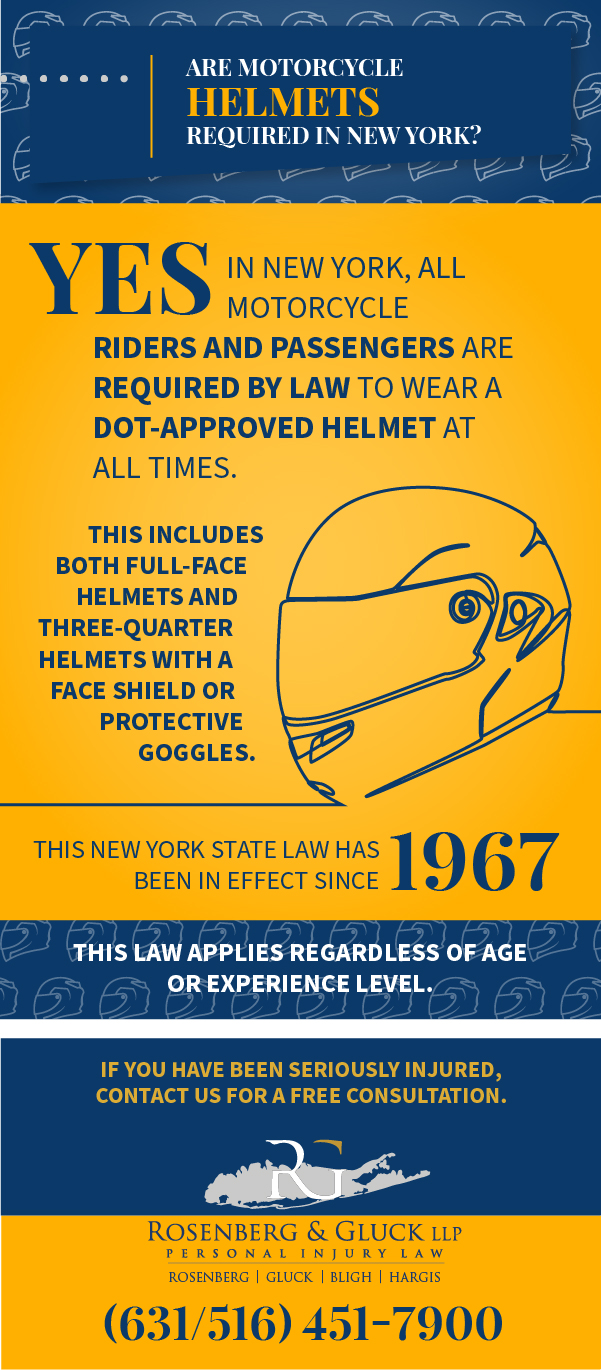
In New York State, all motorcycle riders and passengers are required by law to wear a DOT-approved helmet at all times. This includes both full-face helmets and three-quarter helmets with a face shield or protective goggles. It's important to note that this law applies regardless of age or experience level. This New York State law has been in effect since 1967.
A Well-Maintained Motorcycle Can Keep You Safe
In addition to protective gear, it's also important to regularly maintain your bike. This includes checking tire pressure and tread depth, testing brakes and lights, and ensuring all other components are in good working condition. A well-maintained bike is not only safer to ride, but it can also prevent unexpected breakdowns or malfunctions while on the road.Safe Riding Practices
In addition to wearing proper gear and maintaining your motorcycle, there are also safe riding practices that every Long Island rider should follow. These include:- Always obeying traffic laws and speed limits
- Avoiding distractions such as texting or adjusting music while riding
- Keeping a safe distance from other vehicles on the road
- Using turn signals and hand gestures to communicate with drivers
- Constantly scanning the road for potential hazards or obstacles
Additional Safety Tips
Here are some additional safety tips to keep in mind while riding on Long Island and throughout New York State:- Always ride sober - never operate a motorcycle under the influence of alcohol or drugs
- Take a motorcycle safety course to improve your skills and knowledge
- Be aware of weather conditions before heading out for a ride, and adjust your route or plans accordingly
- Wear bright, reflective clothing for increased visibility to other drivers
- Avoid riding in inclement weather or at night unless absolutely necessary