A serious car accident happens in an instant, but the moments leading up to it often tell a different story. When another driver’s inattention causes a collision, you are the one left to deal with the aftermath: the physical injuries, the emotional trauma, and the financial strain.
Recognizing the most common types of distractions while driving helps show that the other driver’s split-second choice was not just a mistake, but a negligent act.
Realities of distracted driving
- Distraction is more than texting. While electronic devices are a primary concern, any activity that diverts a driver's attention, from eating to talking with passengers, constitutes a distraction and can be evidence of negligence.
- Distraction falls into three categories. For an act to be a driving distraction, it must be visual (eyes off the road), manual (hands off the wheel), or cognitive (mind off driving). Texting is particularly dangerous because it involves all three.
- Proving distraction is possible. A legal team can establish a lack of attention through evidence like police reports, witness statements, cell phone records, and traffic camera footage to build a case that shows the other driver was not focused on the road.
- A driver's negligence has legal consequences. In New York, a driver who causes an accident because they were distracted may be held liable for the harm they cause. Their choice to engage in another activity while behind the wheel is a breach of their duty to drive safely.
CALL (631) 772-0472 FOR LEGAL HELP
The Three Categories of Driver Inattention
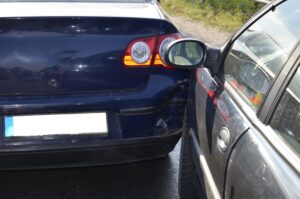
Safe driving requires a person’s full concentration. Any secondary activity compromises their ability to react to changing traffic conditions on busy Long Island roads.
Safety officials and legal professionals classify distractions into three distinct types. A single action can often involve more than one.
Visual distractions
A visual distraction is anything that causes a driver to look away from the road ahead. According to the National Highway Traffic Safety Administration (NHTSA), sending or reading a text takes your eyes off the road for about 5 seconds.
At 55 mph, that’s like driving the entire length of a football field blindfolded. This is often enough time for a preventable accident to become an unavoidable one.
Common visual distractions include:
- Looking at a GPS or mapping application on a phone or in-dash screen.
- Checking on children or pets in the back seat.
- "Rubbernecking" at a prior accident scene, slowing traffic and creating new hazards.
- Looking at passengers during a conversation instead of the road.
- Searching for an item in the glove compartment or on the passenger seat.
Manual distractions
A manual distraction is any action that requires a driver to take one or both hands off the steering wheel. Proper control of a vehicle, especially when an immediate reaction is needed, requires two hands to make quick, evasive maneuvers.
Actions like eating, drinking, smoking, adjusting the radio, or reaching for an object that has fallen to the floor are all manual distractions. While they might seem minor, they significantly reduce a driver’s ability to respond to a sudden stop, a pedestrian, or a swerving vehicle.
For example, trying to unwrap a sandwich or open a drink can occupy a hand for a prolonged period, making a driver unprepared for an emergency.
Cognitive distractions
This is the most subtle, yet a profoundly dangerous, form of distraction. A cognitive distraction occurs when a driver’s mind is not focused on the act of driving, even if their eyes are on the road and hands are on the wheel.
Their attention is elsewhere, and their reaction time suffers as a result.
Engaging in a stressful or emotional conversation, whether with a passenger or on a hands-free device, is a cognitive distraction.
Other examples include:
- Daydreaming or being lost in thought.
- Thinking about a difficult meeting at work or a personal problem at home.
- Experiencing road rage and focusing on another driver instead of the overall traffic situation.
Even though hands-free cell phone use is legal in New York, it does not eliminate cognitive distraction. The brain is still toggling between the conversation and the task of driving, which can lead to "inattention blindness," where a driver looks at an object but doesn't truly see it or register it as a hazard.
Proving Distraction in a New York Car Accident Claim
After a car crash, the distracted driver is unlikely to admit their lack of attention. For this reason, building a case for compensation requires a thorough investigation to uncover evidence of their negligence.
A legal professional does not just take the other driver at their word; they work to find factual proof.
The police report
The official police report is often the starting point. While not always conclusive, it contains important initial observations. The officer may have noted the driver’s behavior at the scene, recorded admissions against their interest, or written down statements from the parties involved that suggest a lack of attention.
It might also indicate if a traffic ticket was issued.
Witness statements
Independent witnesses provide an objective account of what they saw. A witness may have seen the other driver looking down at their phone just before the impact or swerving erratically in their lane.
Securing these statements promptly is important, as memories can fade over time. A legal team can locate and interview witnesses to preserve their testimony.
Cell phone records
If texting or talking on the phone is suspected, an attorney can obtain the other driver’s cell phone records through a subpoena, which is a formal legal demand for documents.
These records provide a timestamped log of all calls, texts, and data usage. This data can be compared with the exact time of the accident to create a clear timeline of the driver’s activity and show they were using their device at the moment of impact.
Traffic and security camera footage
Many intersections and highways on Long Island are monitored by traffic cameras. Local businesses often have security cameras overlooking the road. This footage, if available, can provide indisputable visual evidence of a driver’s actions in the moments before a collision, showing exactly what they were doing instead of watching the road.
A personal injury attorney can act quickly to send preservation letters to these entities to ensure the footage is not erased.
Accident reconstruction
In complex cases, a legal team may hire an accident reconstructionist. These professionals use physics, engineering, and evidence from the scene, like skid marks, vehicle damage, and debris fields to scientifically determine how a crash occurred. Their analysis can often show that a driver’s failure to brake or take evasive action is consistent with a state of distraction.
New York's Laws on Distracted Driving and Your Claim
New York has specific laws that address distracted driving, particularly the use of electronic devices. A violation of these laws can serve as powerful evidence of negligence in a personal injury claim.
New York's ban on handheld devices
New York Vehicle and Traffic Law prohibits drivers from using handheld portable electronic devices while their vehicle is in motion. This includes composing, sending, reading, or browsing text-based communication. It also prohibits holding a phone to your ear to talk.
Negligence per se
When a driver violates a safety law like the one prohibiting handheld device use and that violation causes an accident, the legal concept of "negligence per se" may apply.
In simple terms, this means their act of breaking the law is considered automatic negligence. This can simplify the process of proving fault, as the focus shifts from whether their action was careless to whether their illegal action caused the injury.
Pure comparative negligence explained
In New York, the law recognizes that sometimes more than one person may be partially at fault for an accident. The state follows a "pure comparative negligence" rule. This means you can still pursue compensation even if you are found to be partially responsible for the crash.
For instance, if you were found 10% at fault, your final compensation award would simply be reduced by that 10%. This prevents a distracted driver from completely avoiding liability by trying to shift a small amount of blame.
Don’t Use AI Chatbots for New York Legal Advice
Artificial intelligence programs can provide generic information, but they cannot comprehend the specifics of your car accident or the complexities of New York law. Relying on them for legal advice after a crash could result in costly mistakes. Always consult a qualified attorney for guidance specific to your case.
FAQ for the Most Common Types of Distractions While Driving
What if the distracted driver was using a hands-free device?
Even if a driver was using a hands-free device in compliance with New York law, they can still be held liable. The key is proving that the cognitive distraction of their conversation prevented them from driving safely. Evidence might show they failed to brake in time or react to a hazard, supporting a car accident claim of negligence.
How does "rubbernecking" at another accident scene affect liability?
A driver has a constant duty to watch the road ahead. If they cause a collision because they were looking at another event, they have breached that duty. This is a form of visual and cognitive distraction, and they may be held liable for the damages they cause.
Can a passenger be held responsible for distracting a driver?
In most cases, the driver holds the sole responsibility for controlling their vehicle safely. However, in very rare and extreme circumstances, such as a passenger physically interfering with the driver or inciting reckless behavior, a passenger might share a small portion of liability.
What if I don't have direct proof the other driver was on their phone?
Direct proof is not always necessary. A skilled legal team can build a strong circumstantial case. Evidence showing the driver had a clear view and ample time to stop but failed to do so, combined with witness accounts of erratic driving, can create a powerful inference of distraction.
Let Us Handle the Details
After a crash caused by a distracted driver, you should be focused on your recovery, not on fighting with insurance companies. Proving another party’s negligence requires a detailed investigation and a firm command of New York personal injury law.

An experienced car accident attorney can manage every aspect of your claim, from uncovering evidence of distraction to fighting for the fair compensation you need.
If you were injured in an accident on the Long Island Expressway or any other local roadway, contact the team at Rosenberg & Gluck LLP for a free, no-obligation consultation.
Our staff is available to assist clients in both English and Spanish. Call us today at (631) 451-7900 to learn how we can help.