Getting a bump on the head is a common concern, often leaving people wondering how to tell if it's a serious head injury and whether medical attention is necessary.
A bump on the head typically forms after trauma, as part of your body’s natural response. Though it may look alarming, these small “goose eggs” are often minor head injuries. So, why does this swelling occur, and when should you worry? The attorneys in our personal injury law firm have prepared this guide that includes common causes of head bumps, when to see a doctor, and whether you might have grounds for a personal injury claim.
Common Causes of Head Bumps
Minor or severe head trauma can result from a variety of issues, including:
- Physical Injury: Direct impact to the head causing a scalp hematoma—commonly called a “goose egg”—as blood collects under the skin
- Skin and Hair Conditions:
- Acne or Folliculitis: Red or pus-filled bumps caused by clogged pores or ingrown hairs
- Cysts: Smooth, round lumps under the skin, such as pilar or epidermoid cysts
- Seborrheic Dermatitis: Thick, crusty, itchy bumps that may appear yellow or white
- Benign Growths:
- Lipomas: Soft, movable fatty lumps that are usually painless
- Bone Spurs: Hard, bony lumps, often near the base of the skull
- Other Causes: Insect bites, allergic reactions like hives, or (in rare cases) tumors
When to Seek Medical Care
The Centers for Disease Control and Prevention (CDC) emphasizes that "even what seems to be a light bump to the head can be serious," and can require emergency care, as it can lead to a concussion or a more severe traumatic brain injury (TBI) and brain damage.
Determining whether a head bump is a serious injury can be tricky. Here’s what to look for:
Severe Symptoms—Seek Immediate Attention
- Loss of consciousness, even briefly
- Mild headaches that worsen
- Persistent nausea or vomiting
- Confusion, slurred speech, double vision, difficulty walking, mood changes, or trouble concentrating
- Seizures or extreme drowsiness
- Blood or fluid leaking from the nose or ears
- Unequal pupil size
Non-Emergency Symptoms—Consult a Doctor
- Bumps that grow rapidly, change color, or bleed
- Swelling that doesn’t go away after two weeks
- Signs of infection like fever, pus, or warmth around the area
Treatment and Management
- Minor Injuries: Use ice packs for 15–20 minutes to reduce swelling. Rest and take over-the-counter pain relief (avoid aspirin unless instructed by a doctor).
- Skin Conditions: Medicated shampoos, antibiotics, or antifungal treatments can address infections or dermatitis.
- Growths: Cysts or lipomas may need removal if they become painful or infected.
What Is a Hematoma?
A hematoma is a collection of blood under the skin caused by trauma. A scalp hematoma forms between the scalp and skull, while a subgaleal hematoma collects deeper under the skin. Though they may sound serious, hematomas are usually harmless signs of healing.
Common Accidents Leading to Head Bumps
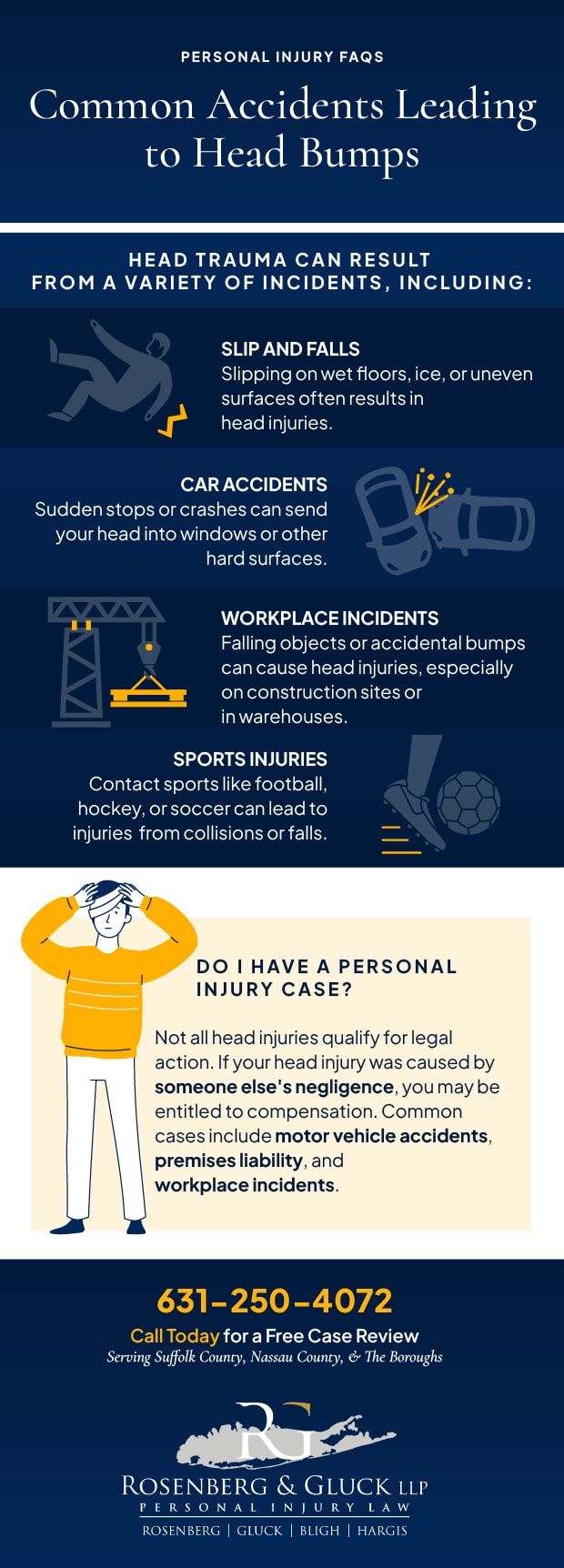
Slip and Falls
Slipping on wet floors, ice, or uneven surfaces often results in head injuries, commonly affecting the back or side of the head.
Car Accidents
Sudden stops or crashes can send your head into windows or other hard surfaces, causing bumps—even in minor accidents.
Workplace Incidents
Falling objects or accidental bumps at work, especially on construction sites or in warehouses, can result in head bumps.
Sports Injuries
Contact sports like football, hockey, or soccer can lead to head bumps from collisions or falls.
Healing Time: How Long Does a Bump Last?
Most minor bumps shrink within a few days to a week as the body heals. The initial red or purple swelling often changes to yellow or green as it resolves.
A hard lump persisting after three weeks may indicate a calcified hematoma or another issue. Consult your doctor if this happens.
Could You Have a Personal Injury Case?
Not all head injuries qualify for legal action, but if someone else’s negligence caused your injury, you might deserve compensation.
- Premises Liability: Businesses may be held responsible for hazards like wet floors that cause slips and injuries.
- Auto Accidents: If a negligent driver caused the crash, you may be able to seek compensation to cover expenses related to your head injury beyond your NY no-fault benefits.
- Workplace Negligence: Unsafe working conditions can lead to injuries, often covered by workers’ compensation claims.
Contact Our Long Island Personal Injury Law Firm
Most bumps are harmless signs of recovery from a minor head trauma, but always pay attention to your symptoms. Seek immediate help for serious warning signs and consider speaking to an attorney if your direct injury was caused by someone else’s negligence. Contact us today for a free consultation.