The way two vehicles collide is more than just a detail in a police report; it is a story. It tells an investigator how a driver was negligent, what kind of evidence is needed, and what injuries to expect.
While you are recovering from the impact, the insurance company for the at-fault driver is already analyzing the crash dynamics. They find ways to limit their financial responsibility.
Knowing the different types of car accidents and what they imply helps you recognize the challenges ahead and why a thorough, independent investigation is so important for your claim.
Decoding the collision: What the type of accident reveals
- The point of impact suggests negligence. A rear-end collision almost always points to the fault of the rear driver. A T-bone crash suggests a driver failed to yield the right-of-way at an intersection.
- Each crash type creates unique injuries. The forces in a head-on collision are vastly different from those in a sideswipe. These forces lead to different patterns of injury that require specific medical documentation.
- The investigation changes with the crash type. Proving fault in a multi-vehicle pileup requires a different investigative approach than a simple rear-end accident. A car accident lawyer gathers evidence tailored to the specific circumstances of the collision.
- Insurance companies use crash types to devalue claims. Adjusters may label a sideswipe a "minor" impact or argue you share the blame in a left-turn accident. A law firm anticipates and counters these specific tactics.
Schedule A Free Case Consultation
Rear-End Collisions
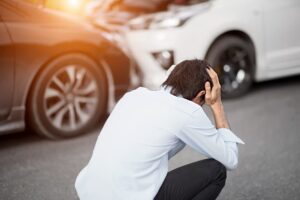
Rear-end crashes are one of the most common types of accidents on Long Island's congested roads. They happen when the front of one vehicle strikes the back of another. While they often occur at lower speeds in stop-and-go traffic, they can also happen at high speeds on highways like the Long Island Expressway, leading to severe injuries.
The presumption of fault in New York
New York law has a legal presumption that the driver of the rear vehicle is at fault for a rear-end collision. The law assumes every driver has a duty to maintain a safe following distance and be prepared to stop.
The rear driver must provide a non-negligent reason for the crash, such as a sudden and unexpected brake failure, which is very difficult to prove.
Common causes of rear-end crashes
The presumption of fault often stems from a driver's clear failure to pay attention to the road ahead. Distracted driving is the leading cause of these preventable accidents.
A legal investigation often uncovers specific acts of negligence that led to a rear-end collision. These careless actions form the basis of a personal injury claim.
A driver’s negligence in these cases often involves one of the following:
- Failing to watch the traffic ahead while texting or using a phone.
- Following the vehicle in front too closely, also known as tailgating.
- Driving while drowsy, which significantly slows reaction time.
- Speeding or driving too fast for the current weather or traffic conditions.
Proving one of these negligent acts strengthens the claim and helps counter any attempt by the other driver to shift blame.
Injuries Beyond Simple Whiplash
Insurance adjusters often dismiss rear-end accident injuries as "minor whiplash." In reality, the force of being struck from behind can cause serious and lasting harm.
The body is violently thrown forward and then snapped back, placing immense strain on the neck and spine. This motion can lead to herniated discs, nerve damage, and chronic pain.
Concussions and other traumatic brain injuries can also occur as the head strikes the headrest or steering wheel.
T-Bone (side-impact) accidents
A T-bone, or side-impact, collision happens when the front of one vehicle crashes into the side of another, forming a "T" shape. These accidents most frequently occur at intersections.
They are particularly dangerous because the side of a vehicle offers very little structural protection to the occupants inside.
Proving Fault at an Intersection
Liability in a T-bone accident almost always comes down to which driver had the right-of-way. The investigation focuses on determining who ran a red light, ignored a stop sign, or made an unsafe turn.
A law firm's investigation goes far beyond the drivers' statements. An attorney works to find objective evidence of what happened in the seconds before the impact.
This may involve seeking out traffic camera footage from the intersection, interviewing witnesses who saw the crash, and analyzing data from the vehicles' event data recorders ("black boxes").
Some intersections also have traffic light sequence data that a lawyer can obtain, showing the exact timing of the light changes.
Common driver errors in T-bone crashes
These accidents are almost always caused by a driver's failure to follow basic traffic laws. They represent a clear breach of a driver's duty to operate their vehicle safely. A thorough review of the accident often reveals one of several common and preventable mistakes.
These errors point directly to the at-fault driver's negligence. A driver’s failure to follow traffic laws often includes:
- Disregarding a stop sign or a solid red light.
- Making a left turn into the path of oncoming traffic.
- Misjudging the speed of another vehicle when pulling out from a side street.
- Failing to yield the right-of-way as required by New York's Vehicle and Traffic Law § 1140.
Evidence of these errors is central to building a successful personal injury claim after a T-bone accident.
Head-On Collisions
Head-on collisions are among the most violent and deadly types of car accidents. They occur when the front ends of two vehicles traveling in opposite directions collide.
The combined forces of both vehicles create a massive impact that often results in catastrophic injuries or fatalities.
Causes of head-on crashes
These accidents happen when one driver crosses the center line and enters the opposing lane of traffic. This is never an excusable action. It is almost always the result of extreme negligence.
Common causes include a driver falling asleep at the wheel, driving under the influence of drugs or alcohol, or being so severely distracted that they lose awareness of their lane position.
Other causes can include trying to pass another vehicle unsafely on a two-lane road or losing control on a sharp curve. The injuries in these cases are often severe, including multiple fractures, internal organ damage, and traumatic brain injuries.
Sideswipe Accidents
A sideswipe accident occurs when the sides of two vehicles traveling in the same or opposite directions make contact. While the initial visual damage may seem less severe than in other crashes, the sideways force can cause a driver to lose control.
This often leads to a secondary and more violent collision with another object, like a guardrail or another car.
Proving Negligence in a Sideswipe
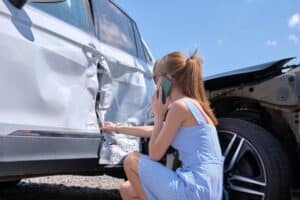
Fault in a sideswipe usually belongs to the driver who failed to maintain their lane. An investigation will focus on proving that the other driver made an unsafe lane change, failed to check their blind spot, or drifted out of their lane due to distraction or impairment.
Paint transfer evidence, vehicle damage patterns, and witness statements are often used to show exactly how the two cars came into contact. A lawyer may retain a collision analyst to examine the physical evidence on the vehicles.
Rollover Accidents
A rollover accident happens when a vehicle tips onto its side or roof. These are complex and violent events that can be caused by several factors. "Tripped" rollovers occur when a vehicle slides sideways and its tires dig into soft ground or strike a curb or guardrail.
Un-tripped rollovers are less common. They are often associated with top-heavy vehicles like SUVs and vans, especially during a high-speed evasive maneuver.
Liability in rollover crashes
Liability for a rollover can be complex. In some cases, another driver's negligence may have caused the driver of the rolling vehicle to take evasive action. In other cases, a defective vehicle design or a faulty tire could be to blame, leading to a product liability claim against the manufacturer.
A dangerous road condition, like a steep, unmarked shoulder, could also point to the liability of a government entity.
Multi-Vehicle Pileups
Chain-reaction crashes and pileups, especially on busy highways, create one of the most challenging liability puzzles. These accidents can be started by a single act of negligence, but the subsequent impacts can involve many drivers.
Determining the sequence of impacts and the fault of each driver requires a rapid and highly detailed investigation. An attorney may need to hire an accident reconstructionist to untangle the chain of events and identify all responsible parties and their insurance carriers.
Do Not Depend on AI Chatbots for Legal Advice in New York
An AI program can define different types of car accidents, but it cannot investigate your specific crash, subpoena a distracted driver's phone records, or counter the tactics of a seasoned insurance adjuster.
Using an AI for legal guidance after an injury may lead you to make critical mistakes. You should always consult a qualified attorney.
FAQ for Types of Car Accidents
What if both drivers are blaming each other for the accident?
This is very common. An attorney's job is to use the evidence to build a case that proves the other driver was primarily or entirely at fault. Under New York's pure comparative negligence rule, you can still recover damages even if you are found partially responsible, but your recovery would be reduced by your percentage of fault.
Does the police report decide who is at fault for the accident?
No. The police officer's opinion on fault, which is included in the accident report, is not legally binding. While it can be influential, it is the insurance companies and, if necessary, a jury that make the final determination of liability based on all the evidence.
What if my accident was caused by a "phantom vehicle" that never made contact?
This is a difficult but not impossible scenario. If another driver made an unsafe lane change that forced you to swerve and crash, they can be held liable even if their car never touched yours. The key is finding evidence to identify that driver, such as witness statements or traffic camera footage.
Get the Help You Need
The type of car accident you were in provides a roadmap for the legal investigation to come. You do not have to face this process alone while you are focused on healing from your injuries.

An experienced car accident law firm has the resources to conduct a thorough investigation tailored to the specific type of crash you endured. A legal team will work to gather the evidence, manage all communications with the insurance companies, and build a powerful case designed to secure the compensation you need.
If you were injured in any type of car accident, contact the team at Rosenberg & Gluck LLP for a free, no-obligation consultation. Our staff is available to assist clients in both English and Spanish. Call us today at (631) 451-7900.