
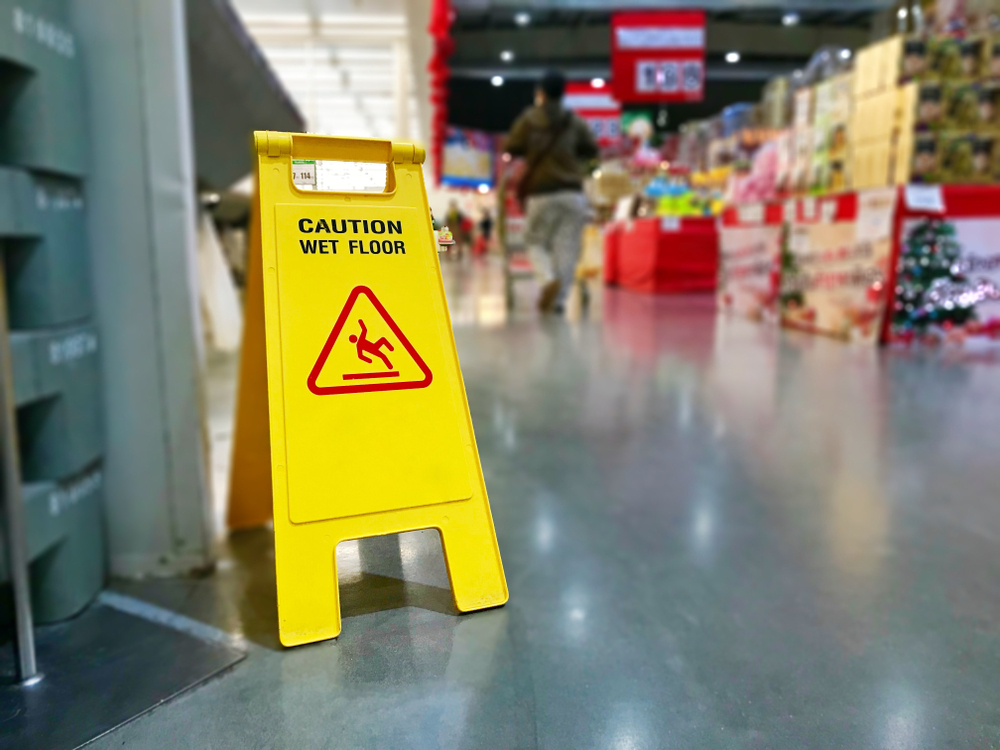
Slip and fall injuries on Long Island have a reputation for being nothing more than a scraped knee or a bruised ego. But for many, a wet floor in a grocery store aisle, a broken step at a restaurant entrance, ice that no one salted in a mall parking lot, leads to serious injuries.
When someone suffers a head injury, spinal cord damage, or hip fracture in a Long Island establishment, several complex liability issues emerge. The severity of the injury and where it occurred are not always enough to determine whether you have a case.
New York premises liability law focuses on whether the property owner knew, or should have known, about the dangerous condition before your slip and fall accident. That question sits at the center of nearly every claim and plays a major role in whether you can recover compensation.
If you are trying to understand your rights, a Long Island slip and fall lawyer at Rosenberg & Gluck, LLP can evaluate your situation and explain what steps may strengthen your claim. For more information on related injury claims, visit our page on premises liability.
Key Takeaways: Slip and Fall Accidents in Long Island Malls, Supermarkets, and Restaurants
- Property owners have a legal duty to keep their premises reasonably safe for visitors.
- To hold them liable for a slip and fall injury, you typically must prove they knew or should have known about the hazard that caused your fall.
- Evidence like surveillance footage, maintenance logs, and witness statements can help establish what the owner knew and when.
- New York’s comparative negligence rule means you can still recover damages even if you were partially at fault.
- Acting quickly after a fall helps preserve evidence that may disappear within hours or days.
How Do I Prove the Property Owner Knew About the Hazard?
You can prove the property owner’s knowledge through “actual notice” (they knew directly) or “constructive notice” (the hazard existed long enough that they should have known).
This is the heart of most slip and fall cases in New York. Property owners are not automatically liable just because you fell on their property. You must show that they either created the dangerous condition, knew about it, or should have discovered it through reasonable inspection.
What Is the Difference Between Actual Notice and Constructive Notice?
New York premises liability law recognizes two ways to prove a property owner had knowledge of a dangerous condition.
Actual Notice
Actual notice means the property owner or their employees directly knew about the hazard before your accident. This can be proven through:
- Written complaints from customers or employees about the specific hazard
- Incident reports documenting previous falls in the same location
- Testimony from witnesses who told staff about the danger
- Maintenance requests showing the owner was informed of the problem
For example, if another customer reported a spill to a store employee ten minutes before you slipped in the same spot, that store had actual notice.
Constructive Notice
Constructive notice applies when the hazard was visible and existed long enough that a reasonable property owner should have discovered it. Courts look at factors like:
- How long the dangerous condition was present
- Whether the hazard was obvious or hidden
- The property owner’s inspection practices
- Whether similar conditions had occurred before
A puddle of water with dirt and footprints tracked through it suggests the spill existed for some time. A freshly spilled liquid with no visible contamination may be harder to prove.
How Long Does a Slip and Fall Hazard Need to Exist to Prove Constructive Notice?
There is no fixed time requirement in New York law. Long Island courts evaluate each situation based on the specific facts.
However, if a spill occurred only moments before your fall, the property owner likely did not have a reasonable opportunity to discover and address it.
On the other hand, if evidence shows the hazard existed for 20 or 30 minutes or longer, constructive notice becomes easier to establish.
Evidence that helps prove duration includes:
- Surveillance footage showing when the hazard first appeared
- The physical condition of the hazard (dried residue, dirt accumulation, footprints)
- Witness testimony about how long the condition had been present
- The property’s inspection schedule and when the area was last checked
What Evidence Can Help My Slip and Fall Claim?
Strong evidence can transform a difficult case into a compelling one. After a fall, several types of evidence may support your claim.
Surveillance Footage
Most malls, supermarkets, and restaurants have security cameras that record continuously. This footage can show when the hazard appeared, how long it existed before your fall, and whether employees walked past without addressing it.
Time is critical when it comes to securing video evidence. Many businesses overwrite surveillance footage within days or weeks. Your attorney can send a preservation letter demanding the footage be saved before it disappears.
Incident Reports
Businesses typically create incident reports when someone is injured on their property. Your Long Island premises liability lawyer will be able to obtain this report. Previous incident reports involving the same hazard or location can also help establish that the owner knew about a recurring problem.
Maintenance and Inspection Logs
Property owners are expected to conduct regular inspections of their premises. Maintenance logs can reveal:
- How often the property was inspected
- Whether inspections were actually performed as scheduled
- If the hazard was noted in previous inspections but not corrected
A gap between scheduled inspections and the time of your fall may support an argument that the owner failed to exercise reasonable care.
Witness Statements
People who saw your fall or noticed the hazard before you arrived can provide valuable testimony. Try to get names and contact information from anyone who witnessed the incident.
Witnesses who observed the hazard for some time before your fall can help establish that the condition existed long enough to constitute constructive notice. Understanding slip and fall accidents is critical to building your case.
Where Do Slip and Fall Accidents Commonly Occur on Long Island?
Slip and fall accidents happen in many types of commercial properties across Nassau and Suffolk Counties. Knowing where these accidents commonly occur and what hazards generally cause them can help you recognize when a property owner may be liable.
Shopping Malls and Retail Centers
Long Island is home to numerous shopping destinations that attract millions of visitors each year. Major shopping areas include:
- Roosevelt Field in Garden City
- Smith Haven Mall in Lake Grove
- Walt Whitman Shops in Huntington Station
- Tanger Outlets at The Arches in Deer Park
- Americana Manhasset on the North Shore
- Westfield Sunrise Mall in Massapequa
Hazards in major shopping areas like these may include wet floors near entrances during rainy weather, spills in food court areas, uneven flooring or loose floor mats, poor lighting in parking structures, and merchandise or debris left in walkways.
Supermarkets and Grocery Stores
Grocery stores present particular slip and fall risks due to the nature of their business. Produce sections with wet floors, spills from broken containers, condensation near refrigerated cases, and recently mopped aisles all create hazards.
According to the Centers for Disease Control and Prevention (CDC), slip and fall incidents are the most common source of liability claims against grocery stores.
Restaurants and Food Service
Restaurants throughout Long Island, from casual eateries to fine dining establishments, must maintain safe conditions for their guests. Kitchen grease near service areas, spilled drinks, wet restroom floors, and uneven transitions between indoor and outdoor seating areas are frequent causes of falls.
What Defenses Do Property Owners Use in Long Island Slip and Fall Cases?
Property owners and their insurance companies often raise defenses to avoid liability. Knowing what to expect can help you prepare.
“We Had No Notice”
The most common defense is that the property owner had no knowledge of the hazard. They may argue the spill happened moments before your fall, giving them no reasonable opportunity to discover it.
Your attorney may be able to dispute such a claim by gathering evidence of how long the hazard existed or showing that the owner’s inspection practices were inadequate.
“The Hazard Was Open and Obvious”
Property owners sometimes argue that the dangerous condition was so obvious that you should have seen and avoided it. While this defense exists in New York, it does not automatically bar recovery.
Courts consider whether the hazard was truly open and obvious under the circumstances and whether the property owner still had a duty to address it.
“You Were Partially at Fault”
New York follows a pure comparative negligence rule. This means you can still recover damages even if you were partially responsible for your fall, but your award will be reduced by your percentage of fault.
If a jury determines you were 20% at fault for not watching where you were going, you would receive 80% of your total damages.
What Should I Do After a Slip and Fall on Someone Else’s Property?
The steps you take after a fall can significantly affect your ability to pursue a claim later.
Seek Medical Attention
Your health always comes first. Even if you feel okay initially, some injuries take time to manifest. Seeing a doctor creates a medical record linking your injuries to the fall.
Report the Incident
Notify the property owner or manager and ask them to create an incident report. Request a copy or note the report number if you are able to.
Contact a Long Island Slip and Fall Attorney Before Speaking to Insurance
The property owner’s insurance company may contact you quickly. Before giving any recorded statements or signing anything, speak with an attorney who can protect your interests. If you need representation in Nassau County, our team is ready to help.
Keep All Medical Appointments
Don’t skip any treatments or checkups. Your medical care creates the documents needed to support your injuries. Gaps in those records open the door for insurance companies to dispute the severity or credibility of your injuries.
How Long Do I Have to File a Slip and Fall Lawsuit in New York?
New York’s statute of limitations for most personal injury claims is three years from the date of the accident. However, there are important exceptions.
If your fall occurred on property owned by a government entity, such as a public building, sidewalk, or municipal parking lot, you must file a Notice of Claim within 90 days. The lawsuit itself must be filed within one year and 90 days.
Missing these deadlines can permanently bar your claim, regardless of how strong your case might be. Residents of Suffolk County should be particularly mindful of these deadlines when pursuing a claim.
FAQs About Slip and Fall Claims on Long Island
Can I sue a store if I slipped on a wet floor but there was no warning sign?
The absence of a warning sign can support your case, but it does not guarantee liability on its own. You still need to prove the store knew or should have known about the wet floor. If the spill existed long enough that employees should have discovered it, the lack of a warning sign strengthens your argument.
What if I did not report my fall to the store at the time?
Not reporting immediately does not prevent you from filing a claim, but it can make your case more challenging to prove. Without an incident report, your lawyer will need to look for other evidence to prove the fall occurred when and where you say it did. Medical records, receipts, video, and witness statements can help fill this gap.
How much is my slip and fall case worth?
Every case is different. The value depends on factors like the severity of your injuries, your medical expenses, lost wages, the impact on your daily life, and the strength of the evidence proving the property owner’s negligence. An attorney can evaluate your specific situation. Learn more about pain and suffering compensation in New York.
Can I still recover damages if the store says I was not paying attention?
Yes. New York’s comparative negligence rule allows you to recover damages even if you were partially at fault. Your compensation will be reduced by your percentage of responsibility, but you are not barred from recovery unless you were solely at fault.
Do most slip and fall cases go to trial?
Most personal injury cases, including slip and fall claims, settle before trial. However, having an attorney prepared to take your case to trial strengthens your negotiating position with insurance companies.
Talk to a Long Island Slip and Fall Lawyer About Your Case
If you were injured in a fall at a Long Island mall, supermarket, restaurant, or other commercial property, you may have questions about whether the property owner can be held responsible. The answer often comes down to what they knew and when they knew it.
Rosenberg & Gluck, LLP has helped slip and fall victims throughout Long Island pursue compensation for their injuries. We investigate what happened, gather the evidence needed to prove notice, and fight for your full and fair compensation.
Call (631) 250-4072 or contact us online for a free consultation. You pay nothing unless we recover compensation for you.
For A Free Legal Consultation, Call