A relaxing walk through your Long Island neighborhood or a visit to a friend’s home can end tragically if a dog attacks you. The physical and emotional scars from such an incident can be significant. When a dog bites you in New York, you may wonder who is responsible for paying your medical bills. In New York, the answer isn’t a simple yes or no.
New York’s dog bite laws are complicated because they allow recovery under two different legal ideas—strict liability and negligence. This dual approach means a victim of a dog bite can still pursue damages even if the owner did not have knowledge of a dog’s prior vicious propensity, allowing them to recover for medical bills and other damages, like pain and suffering.
Call us today at (631) 451-7900 for your free consultation.
Key Takeaways about Strict Liability (Also known as the “One Bite Rule”) vs. Negligence in New York
- New York State has a dual avenue for dog bites that allows victims to recover either under strict liability or negligence
- Under both avenues for liability, a dog owner is responsible for the victim's medical and veterinary expenses, regardless of the dog's past behavior.
- To recover compensation for pain, suffering, or lost wages, the injured person must prove the owner knew the dog had "vicious propensities" or that the owner was negligent and that negligence led to the victim’s injuries.
- A recent change in New York law prevents homeowner's insurance companies from denying coverage or claims based on a dog's specific breed.
- The general time limit, or statute of limitations, to file a personal injury lawsuit in New York is three years from the date of the incident. If dealing with a municipal claim, such as against a police K-9, the time limit is as short as 90 days.
Understanding New York's Unique Dog Bite Law

When you start looking into your rights after a dog bite in New York, you might hear conflicting information. Some states are "strict liability" states, where an owner is almost always responsible for any injury their dog causes. Other states follow a "one bite rule," where an owner might not be held responsible the first time their dog shows aggression. Others follow general negligence rules.
New York is special because it allows recovery under all theories of liability. This mixed approach creates two different standards for recovering compensation. The dog owner is strictly liable if you are able to show they were aware of the dog’s prior vicious propensity. On the other hand, they are liable under a theory of general negligence if you can show the owner’s negligence led to the injuries sustained.
Regardless of whether you can prove negligence or knowledge of prior vicious propensities, your medical costs are the responsibility of the dog owner. This complexity is why many people who have been injured find it helpful to discuss their situation with a personal injury lawyer who handles dog bite cases on Long Island.
What Is Strict Liability in a New York Dog Bite Case?
In legal terms, "strict liability" means that a person can be held responsible for damages even if they weren't negligent or careless. In the context of a New York dog bite, this principle is applied if the victim is able to show that the owner had knowledge of the dog’s prior vicious propensities. The owner is also strictly liable for the victim’s medical costs.
Under New York Law, the owner or harborer of a dog that attacks a person, farm animal, or pet is strictly liable for the medical costs resulting from the injury. This is a powerful protection for bite victims. It means that to have your medical bills covered, you do not need to prove the owner knew their dog was dangerous. You only need to show that their dog caused your injury while you were lawfully on the property.
This rule covers specific, calculable financial losses, often called economic damages. These may include:
- Emergency room visits and hospital stays
- Surgeries, including plastic surgery for scarring
- Doctor’s appointments and follow-up care
- Physical or occupational therapy
- Prescription medications
- Psychological counseling for trauma
These direct costs can add up quickly, especially after a serious attack. Thise strict liability portion of the law ensures that victims are not left with a mountain of medical debt while they are trying to heal.
The "One Bite Rule" and Proving Vicious Propensity
Strict liability also comes into play if you are able to show the owner knew of the dog’s prior vicious propensities. This is where the concept of the "one bite rule" comes into play, and it requires you to prove the owner had knowledge of their dog's "vicious propensities."
This term is misleading because it does not mean the dog must have bitten someone before. Instead, "vicious propensity" refers to any tendency of the dog to act in a way that could endanger the safety of people or property. The key is proving the owner knew or should have known about this tendency before your injury occurred.
What Qualifies as a Vicious Propensity in New York?
Demonstrating that an owner was aware of their dog's aggressive nature is the most challenging part of a dog bite claim. The evidence needed does not necessarily have to be a prior bite. A skilled legal team can help gather information to show the owner had prior notice of the dog’s behavior.
Examples of evidence that can establish vicious propensity include:
- Previous Bites or Attacks: The clearest evidence is a documented history of the dog biting another person or domestic animal.
- Aggressive Behaviors: Did the dog frequently growl, snarl, lunge, or bare its teeth at people who passed by its yard, perhaps near landmarks like the Montauk Point Lighthouse or while walking through Eisenhower Park?
- Restraint: Was the dog often kept chained up or confined to a specific area due to its behavior?
- Warning Signs: Did the owner have "Beware of Dog" signs on their property? While this can be helpful, it is not definitive proof on its own.
- Owner's Statements: Did the owner ever warn others, including you, that their dog was not friendly or might bite?
- Specific Training: Was the dog trained as a guard dog or to attack?
Gathering this type of evidence often requires a thorough investigation, including speaking with neighbors, requesting public records of animal control complaints, and working with professionals. Success in this part of the claim is what allows for a full financial recovery.
Pursuing a Recovery Based on General Negligence
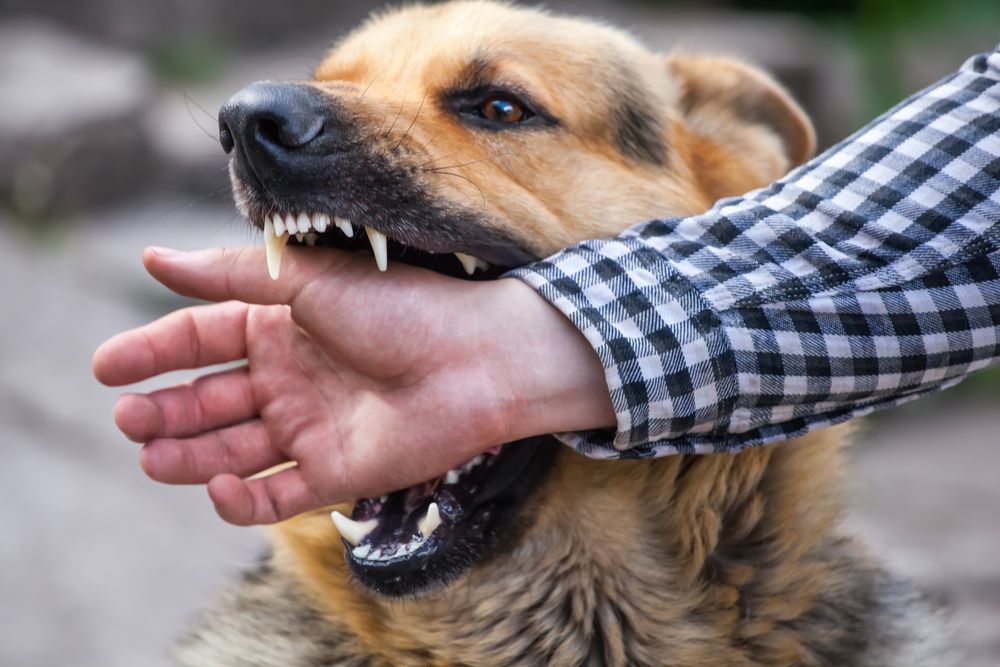
Another recent change in New York Law now permits victims to pursue recovery for their damages, including pain and suffering, if they are able to show their injuries are the result of negligence by the dog owner.
Proving the Owner's Negligence in Your Dog Bite Case
Your ability to recover compensation after a dog bite often depends on proving the owner was negligent. In New York, establishing negligence requires us to prove four key elements:
- Duty of Care: The dog owner had a legal responsibility to control their pet and take reasonable measures to prevent it from harming others.
- Breach of Duty: The owner failed to uphold this responsibility through a careless action or inaction.
- Causation: The owner’s failure directly resulted in the dog attacking and injuring you.
- Damages: You suffered verifiable harm, such as medical bills, lost income, and pain and suffering, as a result of the attack.
Our personal injury attorneys are here to help. We fight for your right to secure the compensation you deserve and hold irresponsible pet owners accountable for the harm their animals cause.
Common examples of dog owner negligence:
- Failing to repair a broken fence or gate, which allows a dog to escape.
- Leaving a dog unsupervised in a yard when they know visitors or workers are present.
- Violating local leash laws by walking a dog without restraint in public.
- Failing to control a dog with a known history of aggression.
Recovering Full Compensation: Beyond Medical Bills
A dog bite can impact your life in ways that go far beyond the initial hospital visit. It can affect your ability to work, your emotional well-being, and your enjoyment of daily activities. The legal system recognizes these harms and allows you to seek compensation for them, but only if you can successfully prove the owner’s knowledge of the dog’s vicious propensities or that the owner was negligent.
These broader damages are separated into two categories.
- Economic Damages: These are the tangible financial losses you have suffered. Under New York’s hybrid rule, medical costs are covered by strict liability, but other economic damages require proving vicious propensity. These include lost wages from being unable to work and future medical care.
- Non-Economic Damages: These are intangible losses that do not have a specific price tag but are just as real. They are meant to compensate you for the human cost of the injury and are only available if vicious propensity is proven. They may include compensation for pain and suffering, emotional anguish, scarring and disfigurement, and loss of quality of life.
For many victims, especially those with visible scarring or lasting trauma, non-economic damages represent the most significant part of their claim. Proving your case is essential to being made whole again.
A Major Change in New York Law: Dog Breeds and Insurance
For years, dog bite victims faced an unfair hurdle: insurance companies. Many homeowner's insurance policies contained clauses allowing them to deny coverage for bites from certain breeds, such as Pit Bulls, Rottweilers, or Dobermans. This left many injured people with no way to recover the compensation they deserved, even with a strong case.
Fortunately, New York has taken a major step to protect victims. A new law now prohibits insurance companies from refusing to issue, renew, or cancel a policy based solely on the breed of the dog owned by the policyholder.
This is a landmark change for dog bite cases across Long Island, from Nassau to Suffolk County. It means that:
- An insurance company cannot deny your claim just because the dog was a specific breed.
- The focus of the case remains on the individual dog's history and behavior, not on unfair stereotypes.
- Victims have a much better chance of securing a fair recovery from the owner's insurance policy.
This legislation levels the playing field and ensures that all claims are evaluated on their merits, which is a significant victory for anyone injured by a dog in New York.
What About My Own Actions? Understanding Comparative Negligence
In some cases, the dog owner or their insurance company may argue that you were partially responsible for the incident. For example, they might claim you were trespassing on their property or provoked the dog. New York follows a "pure comparative negligence" rule to handle these situations.
This rule means that even if you are found to be partially at fault, you can still recover damages. However, the amount of your compensation will be reduced by your percentage of fault. If a court determines you were 10% responsible for provoking the attack, your final financial award would be reduced by 10%. This principle ensures that responsibility is assigned fairly based on the specific facts of the case.
Important Deadlines: The New York Statute of Limitations
It is important to act promptly after an injury. In New York, the law sets a time limit for filing a personal injury lawsuit, known as the statute of limitations. For most dog bite cases, you have three years from the date of the incident to file a lawsuit.
There is a critical exception to this rule. If the dog is owned by a government entity, such as a police department, town, county, or village on Long Island, you must follow special procedures. You are generally required to file a formal "Notice of Claim" within 90 days of the incident before you can proceed with a lawsuit.
Failing to meet these deadlines can permanently prevent you from recovering any compensation.
FAQs for Strict Liability vs. the One Bite Rule in New York vs. Negligence
Here are some answers to common questions about dog bite claims in New York.
What should I do if the dog owner's insurance company contacts me?
It is wise to be cautious when speaking with any insurance adjuster. Their goal is often to settle the claim for the lowest amount possible. You should avoid giving a recorded statement or signing any documents without first discussing your case with an attorney.
Can I still file a claim if the dog didn't actually bite me but caused an injury?
Yes. New York's dog bite statute specifically covers injuries caused by a dog's attack. If a dog lunges at you and causes you to fall and break your arm, the owner can still be held responsible for your medical bills under strict liability. Proving vicious propensity or negligence on the owner’s part would still be necessary to recover other damages.
Does the "one bite rule" mean a dog owner is never responsible for the first bite?
No, this is a common misconception. As explained, "vicious propensity" can be established through many behaviors other than a previous bite, such as growling, lunging, or snapping. If an owner knew of these behaviors, they could be held fully liable even for the dog's first bite.
Who is considered the "owner" of a dog in New York?
Responsibility is not limited to the legal owner. The law applies to anyone who "harbors" or "keeps" the dog. This could include a landlord, a property manager, or another person who was in control of the dog at the time of the incident.
What kind of evidence is helpful in proving a dog's vicious propensities?
Photographs or videos of the dog acting aggressively, statements from neighbors or mail carriers who witnessed prior incidents, veterinary records, and records from local animal control can all be powerful forms of evidence.
What kind of evidence is helpful in proving an owner’s negligence?
Evidence such as proof that the dog was off the property unattended or in a public area off-leash can help establish an owner’s negligence.
Contact a Long Island Personal Injury Attorney
If you or a loved one has suffered an injury from a dog bite, you do not have to figure out the complex laws on your own. At Rosenberg & Gluck, LLP, our team is dedicated to helping personal injury victims on Long Island. We understand the physical, emotional, and financial toll an unexpected injury can take. We are prepared to investigate your case, gather the necessary evidence, and advocate for the full compensation you deserve.
We serve clients throughout Nassau and Suffolk counties and offer assistance in both English and Spanish. Contact us today for a free, no-obligation consultation to discuss your case and learn how we can help.
Call us today at (631) 451-7900 for your free consultation.