
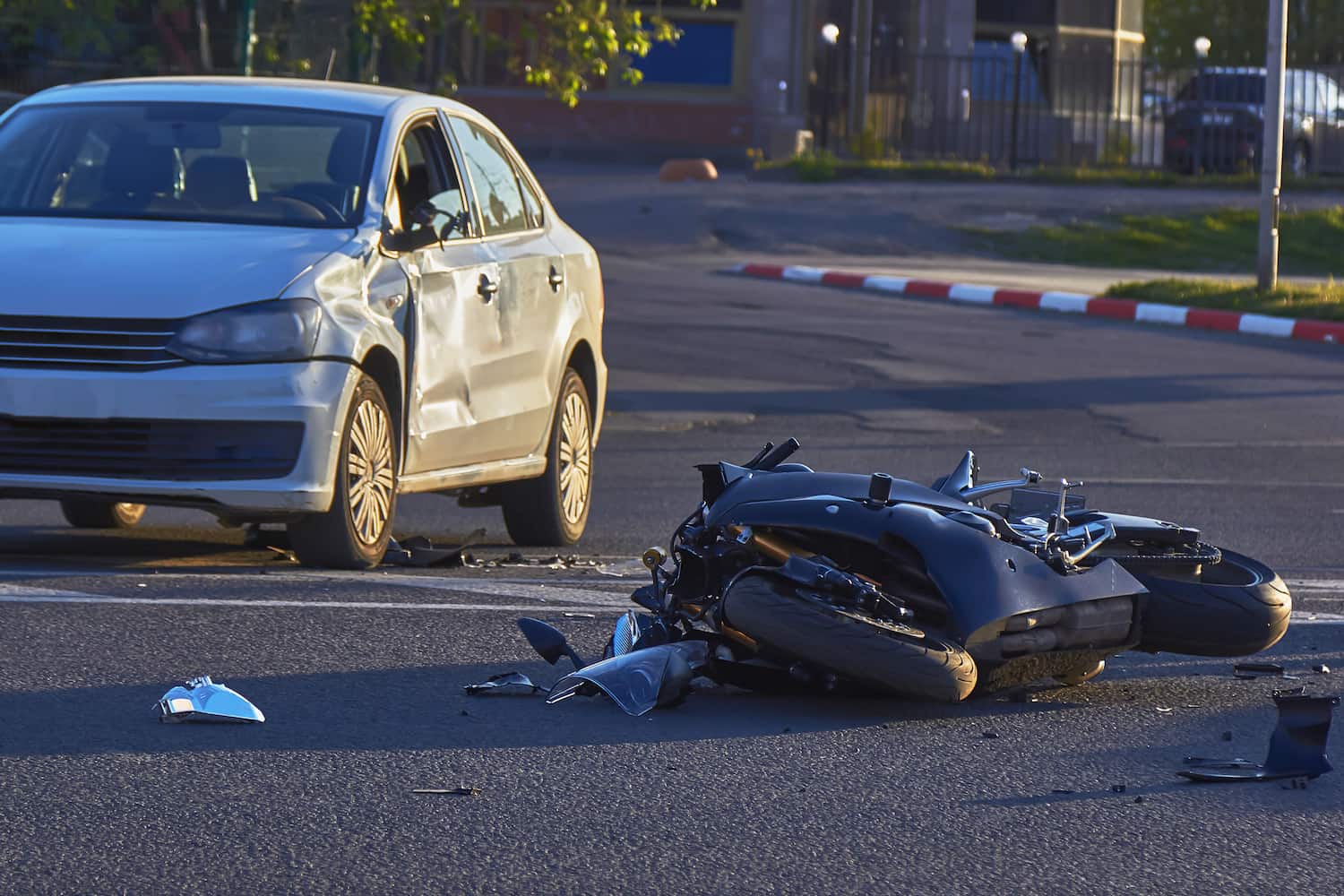
“I didn’t see them” is the most common thing drivers say after left-turn motorcycle accidents on Long Island. Riders know this scenario by a blunter name: SMIDSY—”Sorry, Mate, I Didn’t See You.” It is the single most common type of fatal motorcycle intersection accident, and it happens on Long Island every riding season.
Under New York Vehicle and Traffic Law § 1141, a driver turning left must yield to oncoming traffic, period. If they turned across your lane and caused a collision, the legal presumption initially may favor the injured rider.
But a presumption is not a guarantee. Fault in these cases comes down to how well it is documented, as the other driver may genuinely believe they checked and the road was clear.
Their insurer will evaluate the claim based on the evidence available, and if the file does not include enough detail to confirm what happened, a straightforward case becomes a disputed one.
At Rosenberg & Gluck, LLP, we build left-turn cases on objective evidence so that the question of whether the driver had time to see you is answered by physics, not conflicting accounts. If you were injured on a motorcycle by a negligent driver, contact our Long Island motorcycle accident lawyers to discuss your case for free and learn how we may be able to help.
For A Free Legal Consultation, Call

Key Takeaways About Left-Turn Motorcycle Crashes on Long Island
- Left-turn crash liability in NY favors the straight-traveling rider, but is not automatic. Insurance adjusters will argue you were speeding or invisible to shift a percentage of fault onto you.
- You can recover damages even if partially at fault. Under New York’s pure comparative negligence rule, you receive compensation reduced by your percentage of fault, rather than being barred completely.
- A Lawyer may be able to help with upfront medical costs. Motorcycles are excluded from no-fault coverage, so injured riders often rely on insufficient policy coverage until a case is settled. A lawyer may be able to connect you with a medical provider who will wait to take payment until your case is resolved.

Why Left-Turn Accidents Happen to Motorcyclists
Left-turn collisions are not random. They follow a pattern rooted in how human vision and perception work—and that pattern puts motorcyclists at a severe disadvantage.
The “Looked but Failed to See” Problem
Drivers are mentally programmed to scan for large objects that pose a threat to them—cars, trucks, and SUVs. A motorcycle’s smaller profile does not trigger the same recognition. Researchers call this inattentional blindness: the brain filters out objects it is not actively looking for. A driver may genuinely look in your direction, register no threat, and turn directly into your path.
Speed and Distance Misjudgment
Even when drivers do spot a motorcycle, they frequently misjudge how fast it is approaching. A motorcycle’s narrow silhouette makes it appear farther away than it actually is. The driver assumes they have time to complete the turn, and by the time they realize they are wrong, it is too late.
Sun Glare and Visual Clutter
Long Island roads present unique challenges. Major thoroughfares like Sunrise Highway or the intersections in Hempstead are visually noisy—signs, traffic lights, commercial driveways, and heavy congestion create sensory overload. Add morning or evening sun glare, and a motorcycle headlight disappears into the background.
Defense attorneys and insurance adjusters may argue this visual clutter made it reasonable for the driver to miss you. Your accident injury attorney may reject that premise because complex road conditions require more caution from drivers, not less.
Driver Inattention
Then there is plain distraction. A driver glancing at their phone, adjusting the radio, or talking to a passenger gives the intersection a cursory look rather than the careful scan it demands. A quick glance misses a motorcycle every time.
While all of these factors explain why a car turned in front of a motorcycle, none of them excuse it. New York law does not accept cognitive failure or momentary distraction as a valid defense for negligence.
Left-Turn Liability Under New York Law
VTL § 1141 and the Burden on the Turning Driver
The statute states that the driver turning left must yield to any vehicle within the intersection or so close as to constitute an “immediate hazard.” This creates a burden on the turning driver to wait until the turn can be made with reasonable safety.
When a collision occurs, there is a legal presumption that the turning driver failed to see what was there to be seen. This presumption is rebuttable (i.e., the defense is allowed to present evidence to challenge it), but the starting point favors the rider who had the right of way.
Why “I Didn’t See You” Strengthens Your Case
When a driver claims they looked but did not see you, they are making two admissions at once. By testifying that they looked, they establish that their view was unobstructed. By testifying they did not see you, they establish their negligence—provided we can prove you were visible.
New York law mandates headlight use for motorcycles at all times. If your headlight was on, you were legally visible. The color of your jacket does not entirely negate the driver’s duty to yield to an illuminated headlamp approaching an intersection.
How Insurance Companies Try to Shift Blame to the Rider
Insurance adjusters look for any evidence that you contributed to a motorcycle intersection accident. Under New York’s pure comparative negligence system, every percentage point of fault they assign to you directly reduces what they pay.
Here are the arguments they deploy most frequently:
- Speeding: The defense argues you were traveling above the speed limit, making you harder to see and forfeiting your right of way. If the at-fault driver’s insurer can show you were going 50 in a 35, they will argue the driver had no reasonable opportunity to judge your approach.
- You Could Have Braked or Swerved: This is Monday-morning quarterbacking. The adjuster reviews the scene from the comfort of a desk and argues you had time to take evasive action. In reality, when a car turns in front of a motorcycle at close range, the rider has milliseconds to react, not the luxury of hindsight.
- Headlight Was Off or Dim: The defense may question whether your headlight was functioning. If you were riding during the day and the bulb was out or dim, they argue the driver could not reasonably be expected to see you. We counter this with physical evidence from the motorcycle itself and witness testimony.
- Blind Spot Claims: Some adjusters improperly argue the motorcycle was in the driver’s blind spot. This is a misapplication of the concept—blind spots exist for vehicles traveling alongside you, not for oncoming traffic approaching head-on at an intersection.
For A Free Legal Consultation, Call
How We Prove the Driver Was at Fault

To win a left-turn case, we build the file with objective evidence that eliminates ambiguity. Here is what we look for:
- Witness Testimony: Bystanders, other drivers, and passengers who saw the car turn in front of the motorcycle without stopping or looking. Independent witnesses carry significant weight because they have no stake in the outcome.
- Surveillance and Dashcam Footage: Long Island intersections are frequently covered by traffic cameras, business security systems, and dashcams from nearby vehicles. We move quickly to preserve this footage before it is overwritten—most systems record on 24- to 72-hour loops.
- Accident Reconstruction: We work with engineers who use physical evidence, vehicle data, and scene measurements to reconstruct the crash. They can determine the motorcycle’s speed, the car’s speed and turning arc, and the time gap between when the driver began the turn and when the impact occurred.
- Physical Evidence at the Point of Impact: The damage to both vehicles tells a story. If your motorcycle struck the passenger-side rear door, it suggests the car turned well ahead of you. If you hit the front fender, the car turned abruptly into your path. Crush profiles, gouge marks on the pavement, and debris fields all map the collision.
- Police Citation for Failure to Yield: If the responding officer cited the driver for violating VTL § 1141, that citation is strong evidence of negligence. While a traffic ticket alone does not guarantee civil liability, it establishes that law enforcement concluded the driver broke the law.
- Event Data Recorders: Most modern vehicles record data from the seconds before a collision—speed, brake application, throttle position, and steering input. If the data shows the driver accelerated into the turn without braking, it dismantles their claim that they were proceeding cautiously.
The Injuries Left-Turn Crashes Cause
Left-turn motorcycle accidents on Long Island produce some of the most catastrophic injuries medical providers and healthcare professionals see:
- Leg and Lower Body Fractures: The motorcycle typically takes the initial impact on its side, crushing the rider’s legs between the bike and the car. Tibial plateau fractures, femur breaks, and shattered ankles are common. These injuries frequently require multiple surgeries and extended rehabilitation.
- Traumatic Brain Injuries: A DOT-approved helmet reduces the risk of death and brain injury significantly, but it does not eliminate it. The violent deceleration from a 35 mph impact generates forces that can cause concussions, diffuse axonal injury, and subdural hematomas even with a helmet in place.
- Road Rash and Sliding Injuries: Riders thrown from the bike on impact slide across asphalt, suffering deep abrasion injuries that may require skin grafts. At intersection speeds, road rash can penetrate through clothing and tissue to the bone.
- Internal Injuries: The blunt force of impact can rupture organs, cause internal bleeding, and fracture ribs. These injuries are particularly dangerous because symptoms may not appear immediately. Prompt medical evaluation after any left-turn motorcycle accident on Long Island is critical for your health and for documenting the connection between the crash and your injuries.
FAQs for Left-Turn Motorcycle Accidents
Who is at fault when a car turns left in front of a motorcycle?
In most cases, the turning driver bears primary liability. VTL § 1141 requires the driver making the left turn to yield to oncoming traffic, including motorcycles. If they failed to yield and a collision resulted, the legal presumption of negligence falls on them. However, insurance companies will attempt to assign partial fault to the rider through comparative negligence arguments.
Can I sue if someone turned left and hit me on my bike?
If a driver violated their duty to yield and turned into your path, you have the right to pursue a claim for your injuries, lost wages, and other damages. Even if the insurance company argues you were partially at fault, New York’s pure comparative negligence system allows you to recover compensation reduced by your percentage of fault rather than barring you entirely.
Why do left-turn accidents happen to motorcyclists?
The primary reason is perceptual. Drivers scan intersections for cars and trucks, and a motorcycle’s smaller profile does not register the same way. Drivers also misjudge motorcycle speed and distance because a narrow silhouette appears farther away than it is. Add sun glare, visual clutter at busy intersections, and momentary distraction from phones or passengers, and the result is a driver who looked in your direction but failed to see you.
Will the police report prove the other driver was at fault?
A police report can be a powerful piece of evidence, but how it is used in court depends on what it contains. Under New York law (CPLR 4518), the factual portions of a certified police report, such as the date, time, location, vehicle positions, and documented traffic violations, are typically admissible as a business record. These details can help establish that the left-turning driver violated VTL § 1141.
What if I was T‑boned on my motorcycle?
A T‑bone (side‑impact) crash at an intersection often means a driver ran a light, ignored a stop sign, or failed to yield. Even if the insurer blames you, New York’s pure comparative negligence rules mean you can still pursue compensation; your share of fault, if any, just reduces the recovery.
How long do I have to sue after a motorcycle crash on Long Island?
In most New York motorcycle and car cases, you generally have three years from the crash, two years for wrongful death, and as little as 90 days to file a Notice of Claim if a municipality is involved.
Let Long Island Motorcycle Accident Lawyers Handle the Investigation While You Focus on Healing
The driver turning left had a legal duty to watch for oncoming motorcycles and yield before crossing your path. When they fail to do that, New York law allows you to pursue compensation so that the costs of treatment and missed work fall on the at‑fault party’s insurance—not on you.
If you have questions after a motorcycle crash on Long Island, contact the Long Island personal injury lawyers at Rosenberg & Gluck, LLP to talk about what happened and learn more about your legal rights and options. You can reach us online or by calling (631) 451‑7900. We are able to provide legal support in English or Spanish.
For A Free Legal Consultation, Call