The diverse landscape of the city means millions of New Yorkers rely on bicycles for recreation, exercise, and daily commuting. While cycling offers numerous health and environmental benefits, it also exposes riders to significant, often catastrophic, risk due to motor vehicle negligence.
At Rosenberg & Gluck LLP, we dedicate our practice to representing victims of serious injury throughout Long Island and New York State. We know that behind every statistic is a human being. A cyclist whose life was irrevocably changed by a driver’s distraction, recklessness, or violation of traffic laws.
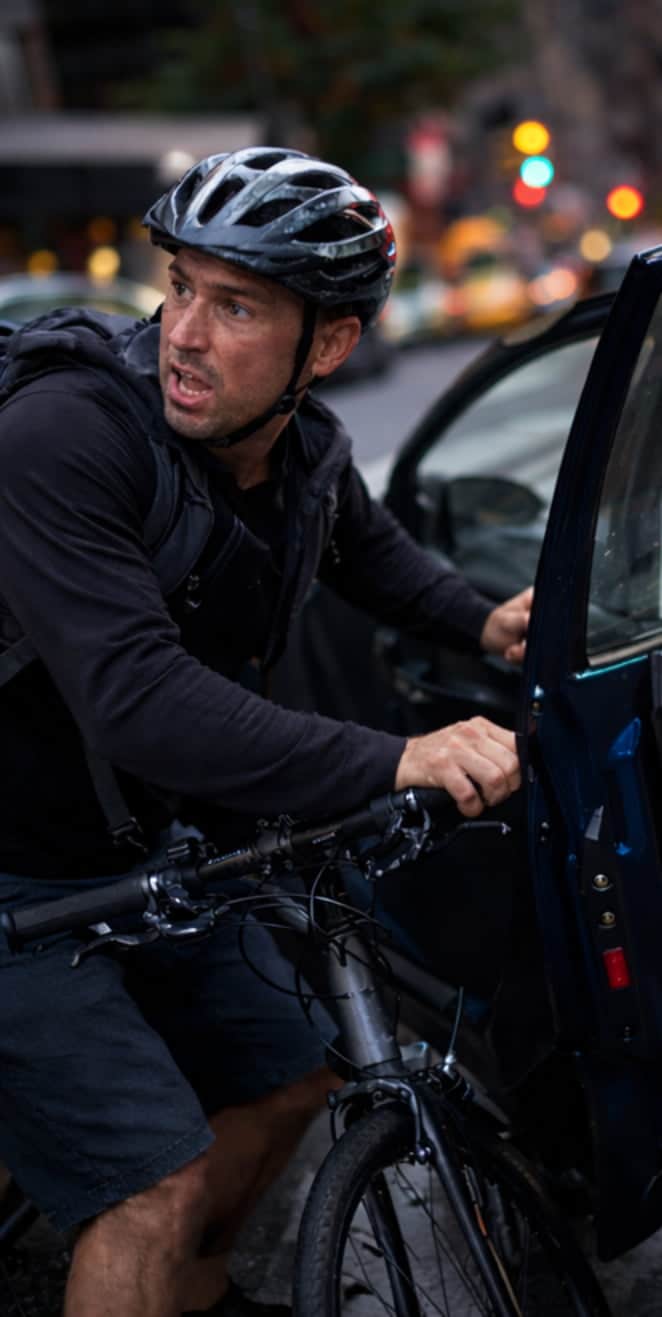
Our guide delves into the hard data behind New York bicycle accidents, exploring the trends, hotspots, most dangerous causes, and the severe physical and legal implications of these collisions. Understanding these statistics is the first step toward advocating for safer roads and ensuring justice for those injured.
u003cp style=u0022text-align: center;u0022u003eCall u003ca href=u0022tel:631-451-7900u0022u003e(631) 451-7900u003c/au003e to discuss your case with us.u003c/pu003e
Key Takeaways: Understanding Your Rights After a Bicycle Accident
- Negligence is Key: The vast majority of serious bicycle accidents in New York are caused by driver negligence, primarily due to distraction, failure to yield, or dangerous turning maneuvers.
- Vulnerability Equals Catastrophic Injury: Cyclists are unprotected, meaning collisions often result in severe, life-altering injuries such as TBI, spinal cord damage, and complex fractures, leading to massive future medical expenses.
- The 30-Day Deadline: New York's No-Fault insurance requires the injured cyclist to file an application for benefits (PIP) within 30 days of the accident to cover immediate medical costs and lost wages. This deadline is strictly enforced.
- Serious Injury Threshold: To sue the at-fault driver for pain and suffering (non-economic damages), the injury must meet the state’s Serious Injury Threshold, a complicated legal requirement that necessitates meticulous medical documentation.
- Municipal Liability: If poor road maintenance contributed to your accident, a separate claim against the responsible government entity may be necessary, involving extremely short Notice of Claim deadlines (often 90 days).
- Comparative Negligence Applies: Even if you were partially at fault for the accident, you can still recover damages, though the total award will be reduced by your percentage of fault.
New York State Bicycle Injury and Fatality Trends
The prevalence of cycling has increased dramatically over the past two decades, yet the infrastructure and driver education needed to support this growth have often lagged behind. The data paints a clear picture of the ongoing crisis: thousands of cyclists are injured, and dozens lose their lives, every year in New York.
Key New York Bicycle Accident Statistics at a Glance
| Statistic Category | Key Data Point | Why It Matters for Injury Claims |
| Annual Bicycle Injuries (NY State) | Several thousand cyclists injured each year in motor-vehicle crashes | Demonstrates the scale of the problem and normalizes serious injury claims |
| Annual Bicycle Fatalities | Dozens of cyclist deaths reported statewide each year | Highlights the extreme vulnerability of cyclists and severity of impact |
| Highest Risk Locations | Urban intersections, high-speed suburban arterials, major commuter routes | Helps identify negligent road design or driver behavior patterns |
| Peak Accident Times | Morning and evening commuting hours | Supports arguments related to traffic congestion and driver inattention |
| Seasonal Risk | Late spring through summer months | Shows predictable risk periods when drivers must exercise heightened caution |
| Most Common Collision Type | Turning accidents (left-turn and right-hook crashes) | Directly tied to failure-to-yield negligence claims |
| NYC-Specific Hazard | Dooring accidents in bike lanes | Clear statutory violation under NY VTL §1214 |
| Primary Driver Cause | Distracted driving and failure to yield | Establishes negligence as the dominant legal factor |
| Injury Severity | High rate of fractures, TBI, spinal injuries | Supports meeting the Serious Injury Threshold |
| Legal Deadline Impact | 30-day No-Fault (PIP) filing requirement | Missing deadlines can eliminate critical benefits |
The Annual Toll
- Injury Count: On average, state-level data consistently shows several thousand cyclists are injured annually in reported crashes involving motor vehicles. The true number is undoubtedly higher, as many minor accidents go unreported.
- Fatalities: New York State consistently ranks among the states with the highest number of annual bicycle fatalities. While the numbers fluctuate, the death toll remains a grim reminder of the vulnerability of cyclists.
Where the Danger Lies: Urban vs. Suburban/Rural
While New York City often dominates the headlines due to its density, significant injury and fatality rates are seen across the entire state:
- New York City: The sheer volume of traffic and riders makes NYC the epicenter of absolute accident numbers. Data from the NYPD shows tens of thousands of bicycle-related collisions over recent years, often concentrated in specific corridors and intersections that lack protected bike lanes.
- Long Island (Suffolk and Nassau Counties): These areas present a unique danger, characterized by high-speed arterial roads, limited protected cycling infrastructure, and dense suburban traffic where drivers may not expect cyclists. Fatalities here often occur on major thoroughfares rather than congested city streets.
- Upstate and Western NY: Accidents tend to occur in the more compact city centers (Buffalo, Rochester, Syracuse, Albany) or involve high-speed rural collisions where drivers are unprepared for cyclists sharing the road.
Statistical Insight: Analyzing crash data often reveals that a disproportionate number of severe injuries and fatalities occur during high-traffic commuting hours (early morning and late afternoon) and in the summer months when cycling is at its peak.
Geographic Hotspots: Where Accidents Cluster
Understanding where accidents are most frequent helps identify systemic safety failures and target enforcement efforts.
Focus on Long Island and Key Traffic Areas
Long Island’s unique mix of high-volume shopping centers, busy commercial strips, and commuter parkways creates high-risk zones for cyclists.
- Intersection Risk: Intersections where dedicated left-turn lanes cross poorly marked bike lanes are chronic accident sites.
- Driver Disregard: In areas designed primarily for vehicular traffic, drivers often demonstrate a failure to yield or properly check blind spots, leading to side-swipe and turning accidents.
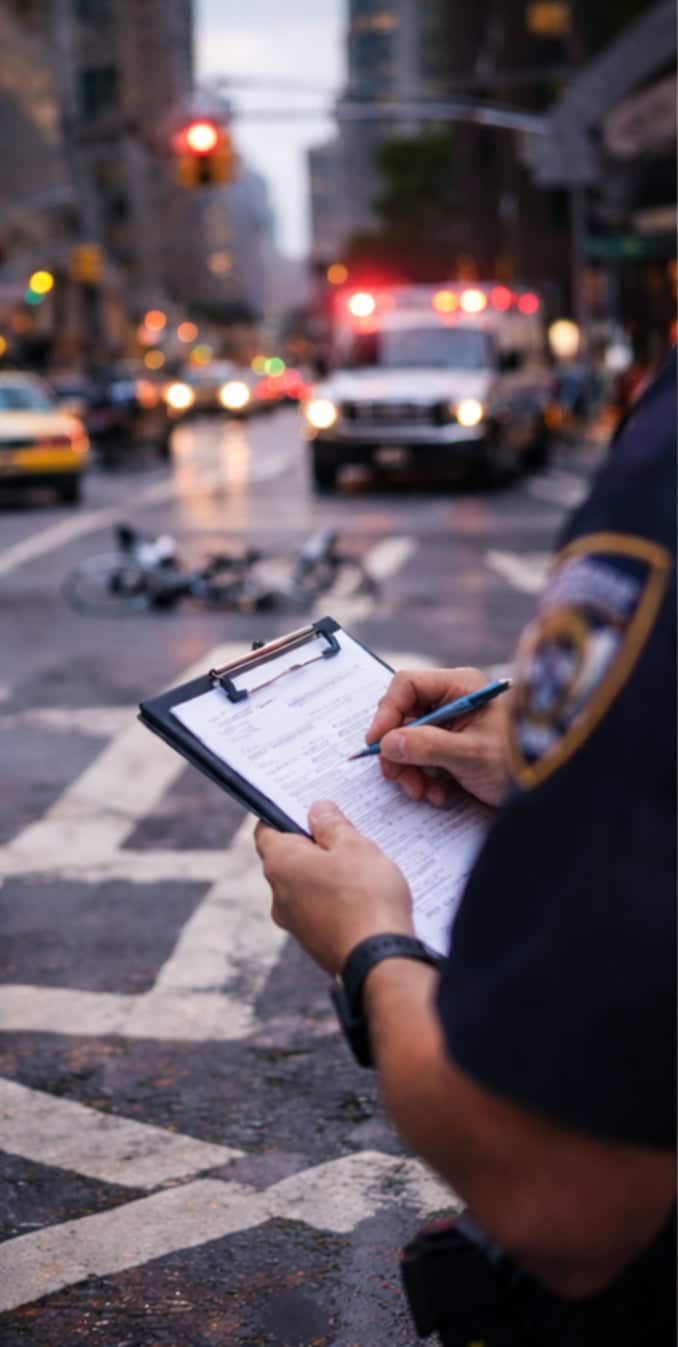
The NYC Perspective: The “Dooring” Epidemic
In New York City, a specific and often devastating collision is the "dooring" accident. This occurs when a vehicle occupant opens their door directly into the path of an approaching cyclist.
- Frequency: Dooring accidents are a significant contributor to cyclist injuries, forcing riders to swerve into traffic or causing immediate, severe trauma as the rider is flung from the bike.
- The Law: New York Vehicle and Traffic Law (VTL § 1214) requires vehicle occupants to exercise reasonable care when opening a door on the side facing traffic. Violating this law is a clear act of negligence that forms the basis of many successful personal injury claims.
Primary Causes of Bicycle Accidents in New York
While the specific circumstances of every accident vary, the vast majority of collisions stem from specific acts of driver negligence, often violating core rules of the road designed to protect vulnerable users.
1. Distracted Driving
This is the number one cause of all vehicular accidents in the modern era, and it is exponentially dangerous for cyclists. A driver texting, talking on the phone, adjusting a GPS, or simply daydreaming may drift into a bike lane or fail to see a cyclist during a turn.
2. Failure to Yield (Intersections and Turns)
This is the most common cause of high-impact collisions.
- Left-Turn Accidents: A driver fails to yield the right-of-way to a cyclist traveling straight through an intersection while the driver attempts a left turn. The driver often claims, "I never saw them," which is legally an admission of negligence.
- Right-Turn Accidents ("Hook"): A driver passes a cyclist on the right, then immediately attempts a right turn, cutting the cyclist off. This maneuver often traps the cyclist between the car and the curb, leading to catastrophic injury.
3. Drunk or Impaired Driving (DWI/DUI)
Although less frequent than distraction, impaired driving causes some of the most catastrophic and fatal bicycle accidents. Impaired drivers exhibit delayed reaction times, poor judgment, and weave across lane boundaries, making them an unpredictable threat to cyclists.
4. Reckless Driving and Speeding
Aggressive drivers who speed, tailgate, or pass cyclists too closely create highly dangerous situations. New York's Vulnerable Road Users Law imposes stricter penalties on drivers who injure cyclists or pedestrians due to speeding, failing to yield, or using improper lane changes.
5. Road Condition and Infrastructure Failures
While less common, some accidents are caused not by another driver, but by poor road maintenance. Potholes, poor drainage, malfunctioning traffic lights, and badly maintained bike lanes can lead to crashes.
In these instances, a claim may be filed against the municipality responsible for maintaining the roadway, requiring immediate adherence to stringent Notice of Claim requirements.
Why Cyclists are Vulnerable
Unlike occupants of a car who are protected by metal frames, airbags, and seatbelts, cyclists are completely exposed. The impact of even a low-speed collision with a motor vehicle can result in life-altering injuries.
Common Catastrophic Injuries
- Traumatic Brain Injury (TBI): Despite helmet use, the sudden impact of hitting the pavement or a vehicle can cause concussions, contusions, and severe, irreversible brain damage. TBIs result in long-term cognitive impairment, memory loss, and personality changes.
- Spinal Cord Injury (SCI): Damage to the vertebrae or spinal cord can lead to partial or complete paralysis, requiring lifelong medical care and specialized equipment.
- Complex Fractures and Joint Damage: Broken femurs, pelvis, collarbones, and complex joint dislocations are common. These often require multiple surgeries, internal fixation, and lengthy rehabilitation.
- Internal Injuries and Organ Damage: Blunt force trauma to the chest or abdomen can cause punctured lungs, splenic rupture, or liver lacerations, often requiring emergency surgery.
- Road Rash and Soft Tissue Injuries: While seemingly minor, deep road rash can require extensive wound care, skin grafting, and may result in permanent scarring and disfigurement.
The Financial Implication of Severity
The severe nature of these injuries immediately raises the stakes of any legal claim. A successful personal injury lawsuit must account not just for immediate hospital bills, but for decades of future expenses. This requires sophisticated legal representation capable of employing life care planners and forensic economists.
The Legal Roadmap: Handling a New York Bicycle Accident Claim
New York's unique No-Fault insurance laws and the serious injury threshold complicate bicycle accident claims. Understanding these rules is essential for securing compensation.
1. New York's No-Fault Law (Personal Injury Protection - PIP)
In New York, when a cyclist is struck by a motor vehicle, they are generally entitled to No-Fault insurance benefits from the striking vehicle's insurance policy. These benefits cover:
- Medical expenses related to the accident.
- Lost wages (up to a limit).
- Other reasonable and necessary expenses.
Crucial Time Limit: A No-Fault application (NF-2 Form) must be filed within 30 days of the accident. Missing this deadline can result in the loss of all No-Fault benefits, putting the financial burden of immediate medical care squarely on the victim. We ensure this critical step is handled immediately.
2. The Serious Injury Threshold
Due to the No-Fault law, a cyclist cannot sue the at-fault driver for pain and suffering (non-economic damages) unless they have sustained a "serious injury," as defined by New York Insurance Law § 5102(d). This threshold includes injuries such as:
- Death.
- Dismemberment.
- Significant disfigurement.
- Fracture.
- Permanent loss of use of a body organ, member, function, or system.
- A medically determined injury or impairment of a non-permanent nature which prevents the injured person from performing substantially all of the material acts which constitute such person’s usual and customary daily activities for not less than 90 days during the 180 days immediately following the occurrence of the injury or impairment.
Because bicycle accidents almost always result in fractures, significant disfigurement, or permanent injuries, most successful claims meet this serious injury threshold. Our legal strategy focuses on documenting the severity of the injury through medical reports to satisfy this requirement.
3. Comparative Negligence
New York follows a Pure Comparative Negligence standard. This means that even if the cyclist was partially at fault for the accident, they can still recover damages, but their award will be reduced by their percentage of fault.
- Example: If a jury awards $1,000,000 but finds the cyclist 10% at fault, the net recovery would be $900,000.
Our role is to aggressively defend the cyclist, minimizing any perceived fault to maximize the final compensation.
Why Choose Rosenberg & Gluck LLP for Your Bicycle Accident Claim
A bicycle accident claim against a negligent driver is a complicated legal battle involving accident reconstruction, medical expert testimony, and sophisticated damages valuation. You need a firm with deep roots and proven success across Long Island and New York State.
Our Skill in Layered Litigation
The attorneys at Rosenberg & Gluck LLP possess the deep technical knowledge required to litigate these cases:
- Filing Notices of Claim: We understand the extremely short deadlines (often 90 days) for filing claims against municipal entities if poor road conditions contributed to the crash.
- Accident Reconstruction: We work immediately with accident reconstructionists to preserve evidence, analyze skid marks, and use vehicle damage reports to prove driver negligence and counter defense claims.
- Maximizing Damages: We partner with life care planners and vocational rehabilitation experts to demonstrate the full, lifelong financial impact of catastrophic injuries like TBI and SCI, ensuring the settlement or verdict fully covers future needs.
Commitment to the Community
We are personally invested in the safety and well-being of our neighbors. We handle every case with compassion, providing personalized attention while leveraging our powerful litigation resources. Our firm operates on a contingency fee basis, meaning you pay no attorney fees unless we successfully secure compensation for you.
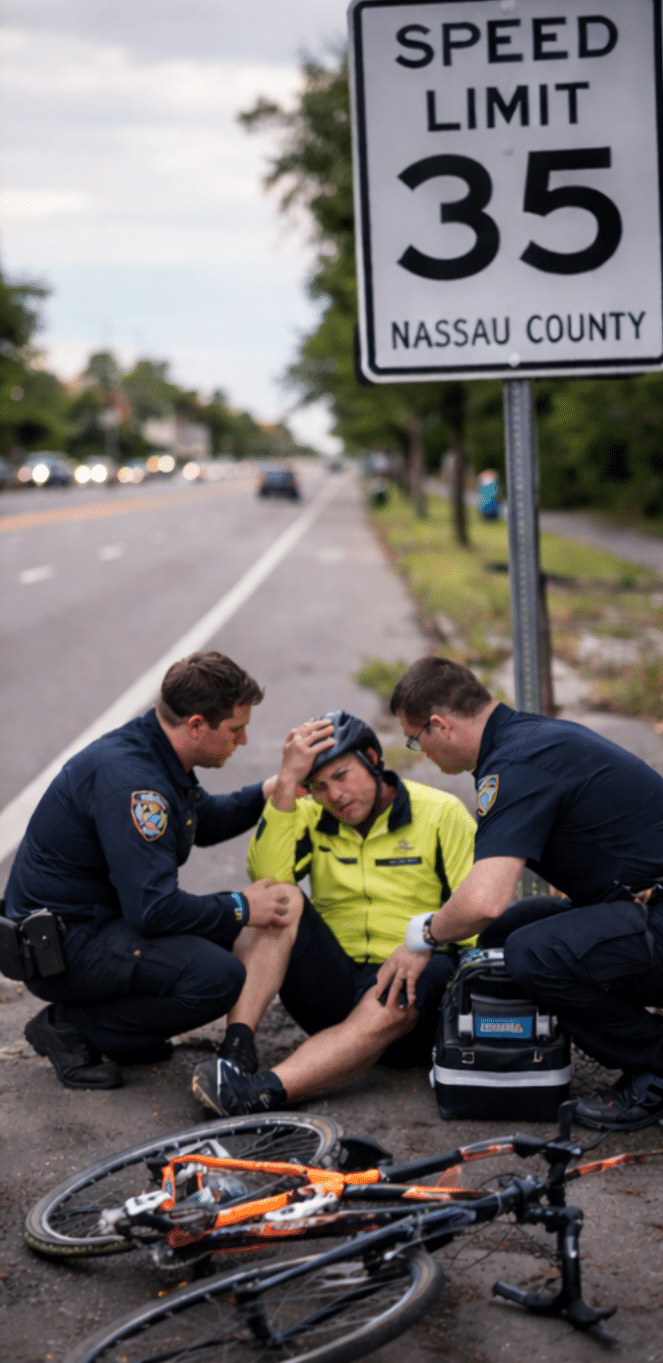
Act Now to Protect Your Rights and Future
The statistics on New York bicycle accidents are sobering, but they should serve as a call to action, not despair. If you or a loved one has suffered a serious injury due to a driver’s negligence, time is your most critical resource. Critical evidence can vanish, witness memories fade, and the 30-day No-Fault application deadline looms large.
Do not attempt to deal with New York Insurance Law or the aggressive tactics of defense lawyers alone. Let the experienced team at Rosenberg & Gluck LLP handle the legal burden while you focus entirely on your recovery.
Contact us today for a free, confidential consultation. We will evaluate your claim, explain your rights under New York law, and begin the necessary steps to attempt to secure the full and fair compensation you may deserve.
u003cp style=u0022text-align: center;u0022u003eCall u003ca href=u0022tel:631-451-7900u0022u003e(631) 451-7900u003c/au003e or submit a contact form on our site today.u003c/pu003e